Why I began to follow this path
My name is Alexander Maier. I was 35 years old at the time of this work and originally come from Upper Bavaria. For many years, I have been concerned with the question of what traces our actions leave in the soil. My personal image for this is the contrast between a bee and a grasshopper: does my work help to build up more than it breaks down?
After 29 years in which, within this image, I saw myself more on the side of the “grasshopper”, the decisive impulse arose to act more consciously like a “bee” and to want to build more humus than I depleted. This is a personal attitude and objective – not a metric and not a claim that the humus content of the areas demonstrably increased during the documented period.
La Gomera became the place where this attitude was to be put into practice. At Finca Argayall, I encountered areas whose condition raised many questions. Some initial assessments appeared unequivocal at first. In the course of the work, however, it became increasingly clear how important it is to distinguish between what is visible, a professionally plausible explanation and genuine evidence. There was no ready-made recipe: there was observation, existing knowledge, physical effort and the willingness to learn from every step.
Acknowledgements
My special thanks go to my teacher and friend Martin Sichler from Übersee am Chiemsee. On his farm, in the greenhouses and in the field, I was able to experience what enthusiasm, a spirit of discovery and consistent practice can achieve. From him I learned not to judge soils solely by individual substances, but to regard them as living systems.
I would also like to thank the entire Finca Argayall community. It made this work possible, invested in the areas and entrusted me with responsibility for the practical implementation. Development of this kind does not happen alone. It requires people who allow questions, share responsibility and endure phases in which it is not yet clear how an area will develop. This report therefore documents not only soil work, but also trust, collective action and learning under real-world conditions.
What this report is – and what it is not
The work described here was carried out before RED existed. It was not a RED project and is not retrospectively presented as one. Only later did the experiences, questions and limitations of this practical work contribute to the development of the methodological thinking from which RED emerged.
The report combines the practical work, photographically documented observations and specialist literature. It makes it possible to trace what was planned, carried out and visibly observed. It does not, however, replace a controlled field trial. There was neither an untreated reference area nor an experimental design that separated the individual inputs from one another.
Understand first, before making changes
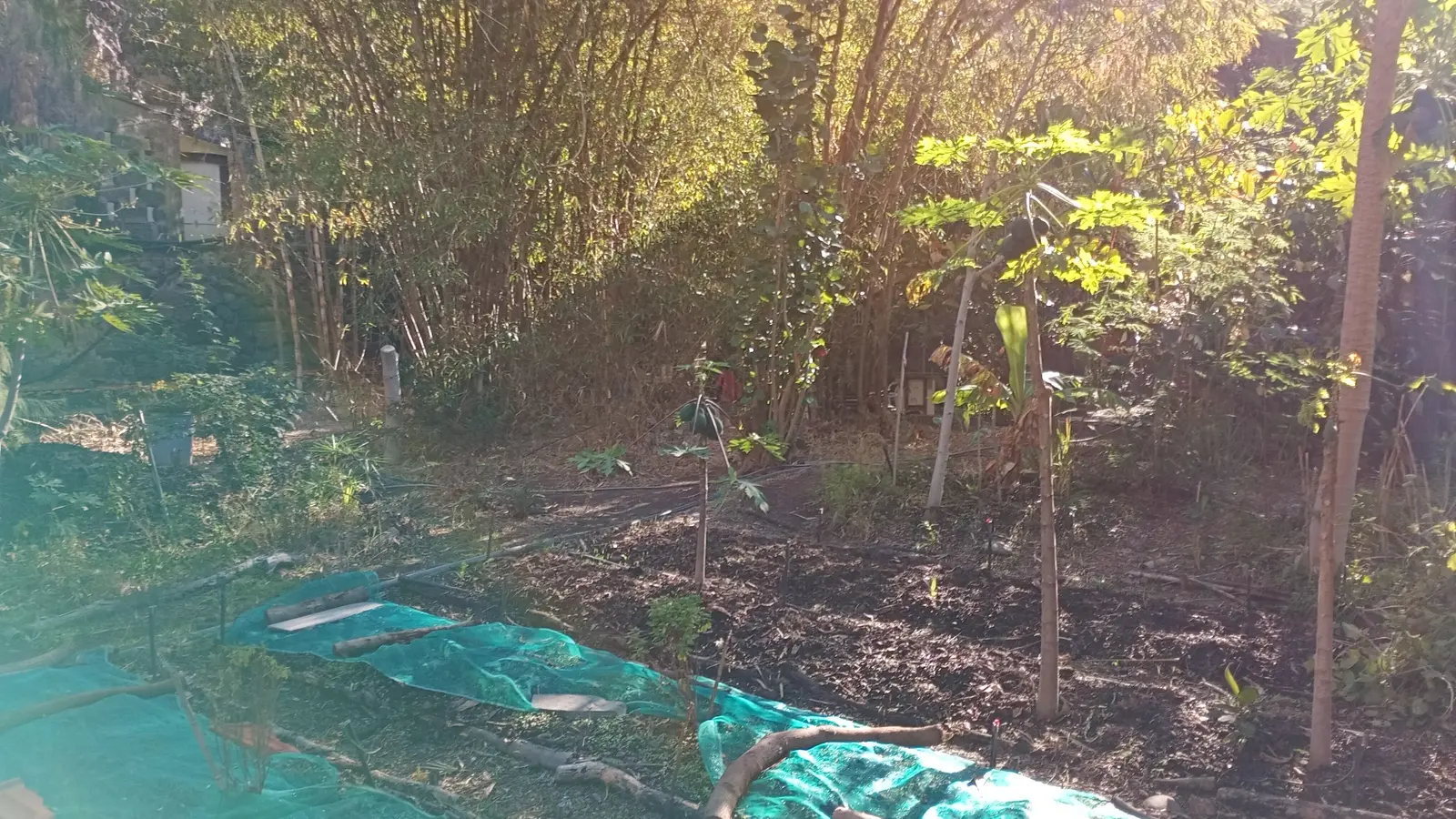
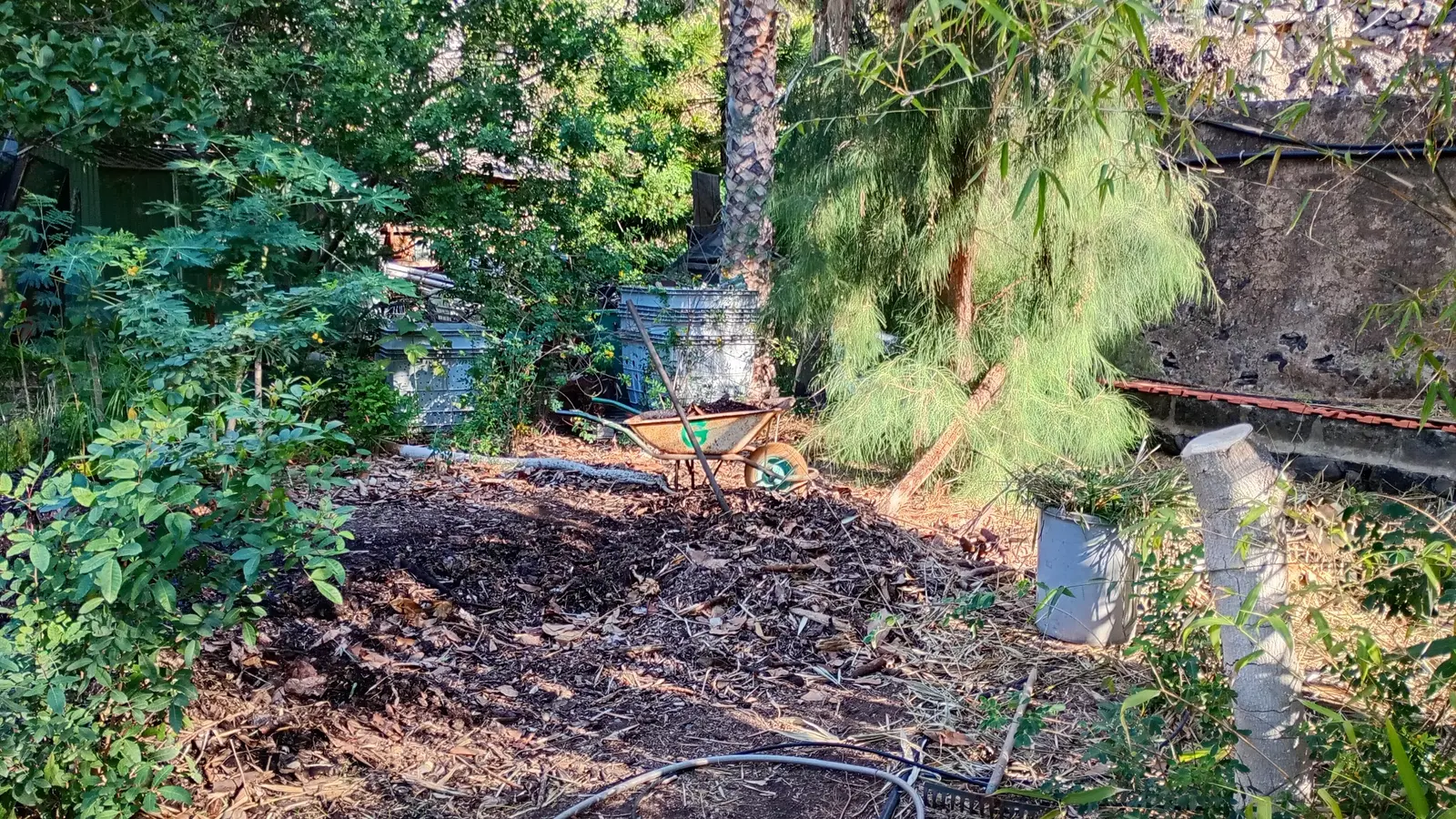
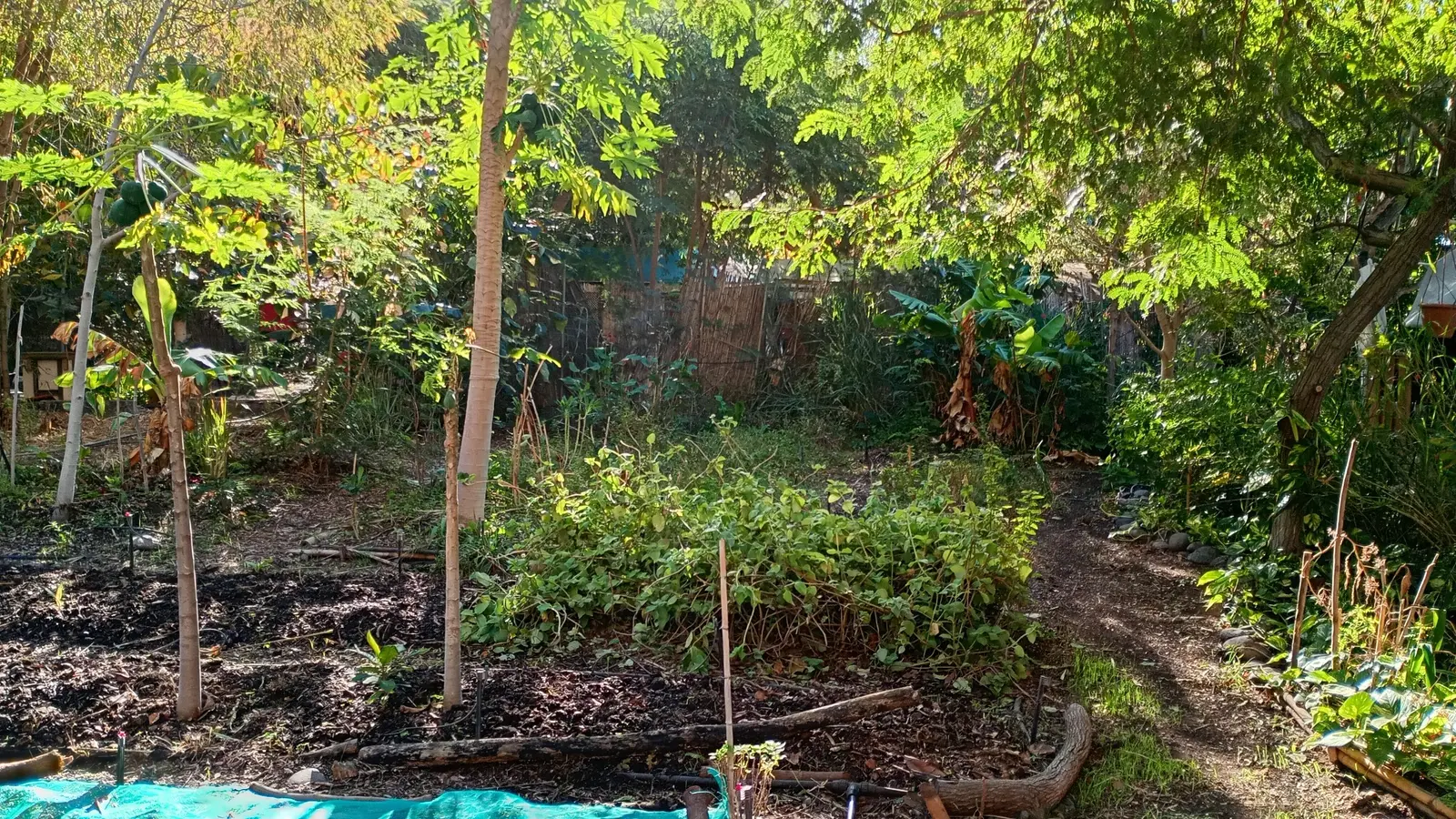
The work took place on a remote property belonging to the Finca Argayall community, with a seminar hotel and an established forest garden. Traces of historically evolved land use, woody plants, paths, pipes and horticultural structures shaped the site. Two sub-areas were selected for targeted soil and vegetation development. They were not standardised plots, but different microsites within a property in active use.
The island location and local material availability influenced the choice of methods. Intense sun, wind, irregular moisture and small-scale shade could affect germination and stand development differently. Volcanic origin describes the island’s geology, but on its own says nothing about pH, nutrients, texture or biological activity in a specific area. Earlier interventions also form part of the site context, but must not be treated as the unequivocal cause of the observed condition without evidence.
What was visible – and what would first have required measurement
| Level | Documented or suspected at the start of the project | Required for a robust baseline assessment |
|---|---|---|
| Surface | In places sparse or patchy cover, areas of bare soil and an uneven appearance. | Standardised cover assessment and recording of signs of erosion, crusting and surface sealing. |
| Structure | A need for cultivation and locally compacted-looking zones; little visible crumb structure. | Spade profile, penetration resistance, bulk density and aggregate stability at a defined soil moisture level. |
| Water | Low storage capacity and uneven absorption were suspected; the surface dried rapidly in places. | Standardised infiltration test, soil-moisture dynamics, and documented irrigation volume and rainfall. |
| Chemistry | No representative measurement series of the soil reaction was available. | Calibrated pH and EC measurements, nutrient analysis, organic carbon and, where appropriate, cation exchange capacity. |
| Biology | The photographs do not permit a reliable assessment of the microbial community or its activity. | Root condition, visible soil organisms, soil respiration and – where suitable for the question – laboratory parameters. |
Old organic material in four pits
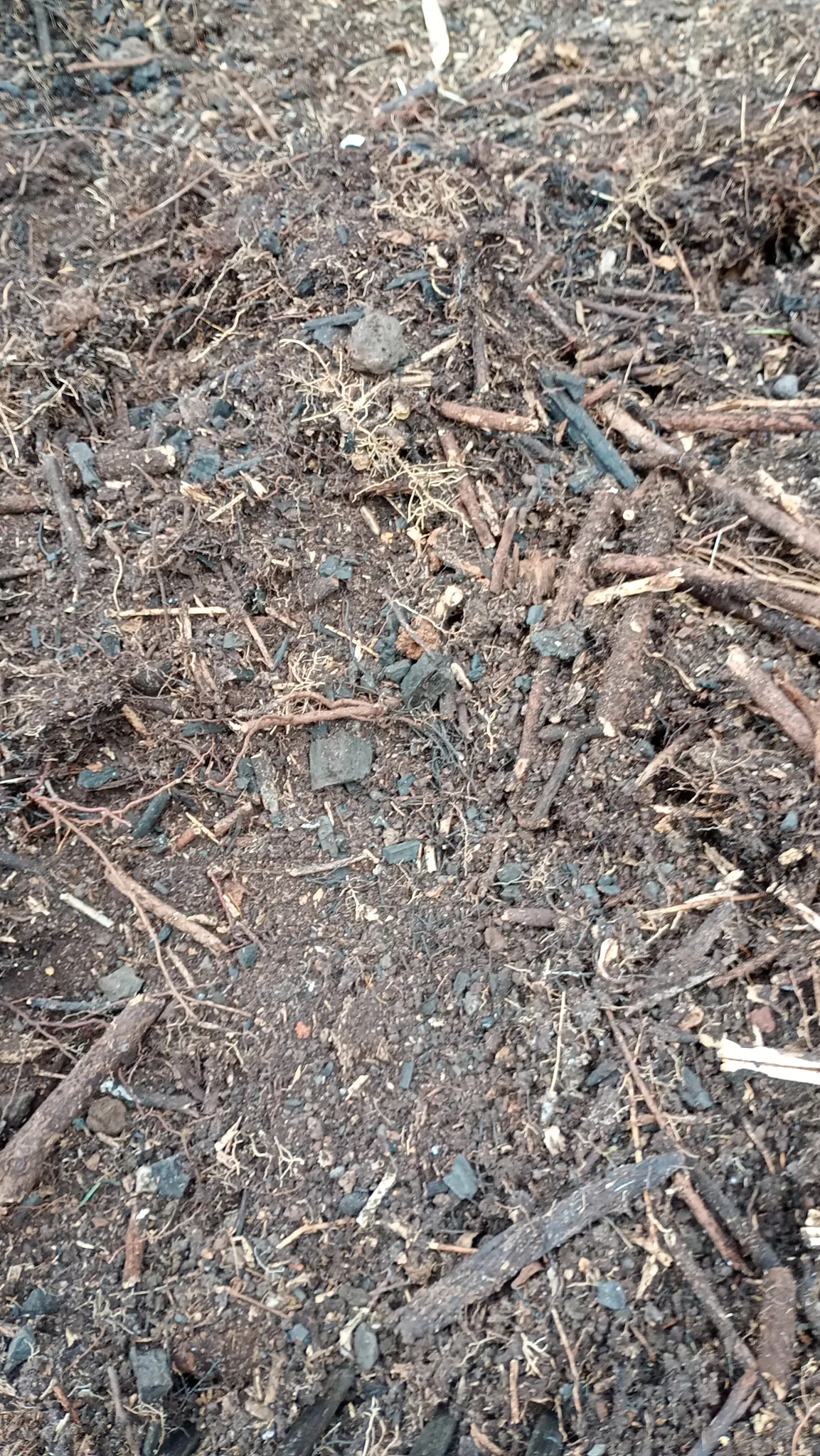
Plant and wood residues were uncovered at four separate locations across the two worked areas, which together covered 350 m². The material was dry, fibrous and only partially decomposed; in this specific case, it had a neutral odour. A photograph dated 27 January 2026 documents one of the sites. According to the head gardener, the material had been in the ground for at least three years, possibly longer. “Mummified” describes only the visible appearance here and is not a biological process diagnosis.
The photographs demonstrate the state of preservation and spatial embedding, but not microbial composition, hygienic status or compost maturity. Slow decomposition may be influenced by several factors acting together: limited oxygen exchange, too little or too much water, temperature, wood type and lignin content, large particles, nutrient limitation, a small contact area, pH and the organisms present. A high C:N ratio may contribute, but does not explain the finding on its own.
Pore space, compaction and mixing determine how effectively air reaches the material.
Conditions that are too dry slow conversion; conditions that are too wet can promote oxygen-poor zones.
Wood type, lignin content, particle size, nutrients and contact area influence decomposability.
Temperature, pH, organisms and burial depth affect the rate and course of decomposition.
Dry material with clearly recognisable structure at four separate sites; in this specific case, it had a neutral odour.
No process measurement or analysis identified a single limiting factor.
Working hypothesis: Difficult-to-decompose material, limited air exchange, and unfavourable moisture and process conditions may together have slowed decomposition. Testing this would require, at a minimum, documentation of moisture, odour, temperature, burial depth and material characteristics. Simply depositing carbon-rich material does not in itself constitute reliably managed composting.
Not a single remedy, but a learning system of interacting effects
The objective was not to use one product to create an isolated, rapid effect. Instead, the aim was to strengthen coupled functions of a soil–plant system: absorb water, protect the surface, explore different rooting zones, continuously provide organic inputs and align decisions with the development observed. Neither a one-off inoculation nor a mineral amendment could replace these connections.
Four functional objectives
Aim for better infiltration, less surface crusting and a resilient crumb and pore structure.
Create habitat and recurring organic inputs instead of relying solely on a one-off introduction of organisms.
Enable rapid cover, different rooting zones and robust, functionally diverse establishment.
Observe, document and compare, then progressively continue, modify or discontinue measures.
The long-term guiding vision was therefore not a static final state, but a resilient system capable of learning.
Five principles
- Think holistically: Regard soil structure, water, organic matter, plants, microorganisms and management as a coupled system.
- Manage processes: Oxygen, moisture, material quality, timing and disturbance are often more decisive than a product name.
- Allow for time: Germination may become visible within days; stable changes in structure and organic matter take considerably longer.
- Make cautious statements: Do not infer an effect from a plausible mechanism, but test it through measurement, comparison and repeatable documentation.
- Remain practical: Methods must work with local materials, available water, labour time and the actual use of the areas.
The adaptive work cycle
- Capture the initial condition, microsite, resources, area size, weather and available work equipment.
- Define the objective, measure, product, dose, possible risks and a suitable comparison logic.
- Record timing, work steps, equipment, cultivation depth, quantity and deviations.
- Record indicators and photographs at fixed points and at times determined in advance.
- Confirm, reject or refine hypotheses and select the next measure accordingly.
This logic describes the intended management process. Not every step was documented in a fully standardised manner during the practical implementation.
Minimum information for every application
| Field | Minimum information to document | Why it is needed |
|---|---|---|
| Product and batch | Full name, manufacturer, batch number and analysis sheet. | Composition and subsequent traceability. |
| Objective | For example, organic input, testing water retention or targeted nutrient correction. | Align the measure with a testable function. |
| Area | Unique ID, size, site plan, north orientation and, where applicable, reference area. | Make dosage, photo points and comparisons traceable. |
| Quantity | Total quantity and quantity per square metre; state dilution separately. | Describe exposure and repeatability. |
| Method | Surface-applied, incorporated, watered or sprayed; depth, equipment and working method. | Record the application route as a possible influencing variable. |
| Timing | Date, time, soil moisture, weather, and the most recent and next irrigation. | Include site conditions in the interpretation. |
| Observation | Before and after according to a fixed schedule; include null findings and undesirable effects. | Avoid selective recall and substantiate decisions. |
Berkeley compost as an intensively managed process
To build organic matter, hot compost was produced following the basic principle of the Berkeley, or rapid-composting, method. Carbon- and nitrogen-rich source materials are mixed homogeneously, brought to a suitable moisture level and turned regularly. Turning moves outer material inwards, distributes heat and water and renews pore space. The objective is rapid aerobic decomposition – not merely reaching a high temperature.
Why this method suited the project
Green and brown components from the site could be processed into a more homogeneous soil amendment.
Every turning provided a checkpoint for temperature, moisture, odour, structure and deviations.
With consistent management, the active stage can be structured within a relatively short period.
This was balanced by a high labour requirement and clear limitations. “Rapid” does not automatically mean mature, hygienically safe or suitable for every application. An effective hot phase can reduce many weed seeds and pathogens, but requires a sufficient and documented time–temperature regime throughout the entire pile. Finished compost remains an input into a soil system; on its own it guarantees neither lasting humus accumulation nor any particular microbial development.
Components and practical starting values
| Component | Function and examples | Practical guidance |
|---|---|---|
| C-rich materials | Structure and energy source, such as dry leaves, hay, straw and suitable fine woody fractions. | Combine with N-rich materials so that the overall mixture has an approximate C:N ratio of around 30:1. |
| N-rich materials | Protein- and nitrogen-rich components, such as fresh green cuttings or suitable manure. | No blanket 1:1 volume rule; density, water content and nitrogen content differ considerably. |
| Particle size | Influences contact area, pore space and homogeneity. | A range of approximately 1.3–3.8 cm serves as practical guidance. What matters is an even mixture with sufficient pore space; these values are not exact limits. |
| Moisture | Enables microbial metabolism, but must not obstruct air exchange. | Approximately 50% as a starting point: evenly moist, neither dripping nor waterlogged. |
| Pile size | Sufficient mass retains the heat generated during decomposition. | Roughly 0.9 m on each side as a minimum guide; larger piles must remain aeratable and workable. |
The C:N ratio describes the overall mixture and cannot be determined precisely from the appearance of individual layers. Temperature, odour and moisture therefore serve as ongoing feedback. For finely shredded material, approximately 21 to 28 days is a guideline period, not a fixed guarantee of maturity. Whether the compost is ready for use must be assessed by considering its temperature profile, odour, moisture, structure and intended use together.
Practical process management
- Set-up: Mix the source materials homogeneously, moisten them evenly and build a sufficiently large pile. Once the process has started, do not add fresh material without documenting it.
- Heating: Observe core temperature, odour and moisture. If the pile does not heat up, this is a diagnostic clue – not a reason to reflexively add more products.
- Turning: Move outer material inwards and inner material outwards. Turn daily at first, then every other day as the intensity of the reaction declines; the specific sequence should be documented for each batch.
- Control: If the odour is pungent or putrid, check pore space and moisture; moisten dry areas gradually while turning. Temperature peaks alone are not a quality objective.
- Assess together: Consider the reaction after turning, temperature, odour, structure, recognisable source materials and intended use together.
When the pile responds differently than expected
| Observation | Possible causes | Next check or action |
|---|---|---|
| Pile remains cool | Too small, too dry, very coarse or too little readily available nitrogen. | Check core temperature, test moisture, and document geometry and the source mixture. |
| Putrid or sulphurous odour | Too wet, compacted, insufficient air exchange or very N-rich. | Turn immediately, create pore space, mix in dry structural material if necessary and stop adding water. |
| Ammonia odour | Excess N or high pH during the active phase. | Consider C-rich structural material and check temperature and moisture. |
| Dry edge zones | Evaporation, wind or uneven wetting. | Moisten selectively while turning and, if appropriate, cover without preventing air exchange. |
| Temperature falls early | Readily available substrate exhausted, pile too small, or a water or air problem. | Observe the reaction after turning and do not decide on the basis of a single measurement. |
Minimum record: Date, time, core temperature at defined points, moisture assessment, odour, turning, water addition and every deviation. Odour is a useful warning sign, but not complete proof of maturity or hygienic safety.
When the compost is ready for the area
| Useful combination of maturity indicators | What is not sufficient on its own |
|---|---|
| After turning, the temperature returns towards ambient temperature. | Only the number of days elapsed or a single high temperature. |
| Earthy odour, neither putrid nor ammoniacal. | Only a dark colour or a subjective description of odour. |
| Dark, crumbly and relatively homogeneous structure. | The assumption that every hot compost is automatically hygienically safe. |
| Source materials are largely, though not necessarily completely, unrecognisable. | The claim that the product produces permanently stable organic matter irrespective of the site. |
| For sensitive use, a germination or plant test with a suitable comparison substrate. | A decision to use it without considering the crop, application route and risk context. |
The decision to use the compost therefore follows from several maturity indicators, the intended use and the respective risk. For a professionally substantiated application, complete time–temperature records, the origin and composition of the source materials and, where appropriate, laboratory or hygiene tests would also be advisable.
Open the soil without unnecessarily losing existing functions
Existing vegetation was not categorically “worthless”. Even patchy vegetation can provide shade, reduce the impact of heavy rain, preserve roots and soil life and reduce erosion. The existing stand should therefore first be recorded by growth form, cover, rooting zone, mode of reproduction and possible problem species. Competition was reduced only where this was required for seed contact, light or work access.
Healthy, seed-free biomass could be returned to the cycle as a resource; diseased, invasive or heavily lignified material had to be assessed separately. Some woody plants remained as part of the system, while others were removed and biologically recycled. After intervention, areas of bare soil should remain exposed for as short a time as possible and be protected by compost, rapidly emerging seed and a thin, suitable layer of mulch.
Benefits and limitations of opening the soil
| Potential benefit | Risk | Working rule |
|---|---|---|
| Create a seedbed and contact between seed and soil. | Soil that is too wet can smear; soil that is too dry can be excessively pulverised. | Work only at a suitable moisture level. |
| Incorporate compost and clearly defined amendments shallowly and evenly. | Repeated intensive cultivation can damage aggregates, accelerate mineralisation and promote renewed compaction. | As shallow as required for the objective, with the depth documented. |
| Temporarily open near-surface compaction or matted root layers. | Tree roots, irrigation pipes and other infrastructure can be damaged. | Locate obstacles and roots in advance; do not use the rotary tiller as recurring routine maintenance. |
The specific preparation was carried out by hand, progressively working around roots, stones and terrain. The aim was to open the topsoil without unnecessarily compacting deeper layers. The photographs document the manual work and the exposed condition after intervention, but not the cultivation depth, soil moisture or any measured improvement in structure.
Every input needs a specific purpose
Before any application, the following should be clarified: Is the limitation to be treated documented? Does the assumed mechanism of action fit the pH, texture, salinity, climate and crop? Are the product, composition and dose known? Is there a small test and comparison area? Can the expected result be measured? If any of these questions remain unresolved, restraint or a delimited preliminary test is appropriate.
Materials used and professional assessment
Mature compost, natural zeolite, diatomaceous earth, basalt rock dust, phosphate-bearing rock powder, humic-substance granules, liquid humic substances and an algae product were applied across the two worked areas, which together covered 350 m². Organic cover complemented the measure. Compost tea and the seed mixture are discussed separately in the following sections. The materials formed part of the same overall measure; their individual effects were not measured separately.
| Material | What it is and the role it was intended to perform | Conditions and limit of the claim |
|---|---|---|
| Mature compost | Largely decomposed organic matter containing nutrients and microbial biomass. It served as an organic input and was intended to support soil structure, nutrient cycling and biologically active topsoil zones. | Origin, maturity, feedstocks, salinity, dose and soil conditions determine suitability and effect. Compost alone guarantees neither lasting humus accumulation nor any particular microbial development. |
| Natural zeolite | A porous aluminosilicate with cation exchange capacity. It was intended to complement the retention of exchangeable cations and the potential retention of nutrients and water. | Mineralogy, particle size, dose and the initial soil are decisive. Zeolite does not create nutrients, but can bind existing ions temporarily and release them again; its individual effect was not measured separately. |
| Diatomaceous earth / diatomite | A porous siliceous material made from the shells of fossil diatoms. It was intended to influence pore space and sorption, thereby complementing physical properties and potentially the water balance. | The product, purity, particle size, dose and soil are decisive. Diatomaceous earth is not inherently acidifying; the specific soil response was not measured in isolation. |
| Basalt rock dust | Finely ground volcanic rock containing slowly weathering minerals. It was used as a long-term mineral input, not as a fast-acting fertiliser. | Release and possible nutrient contributions depend on mineralogy, particle size, moisture, soil chemistry and time. In acidic soils, basalt can have a neutral to pH-raising effect or buffer against acidification. |
| Phosphate-bearing rock powder | A mineral phosphorus source that, depending on the product, may also supply calcium and other mineral constituents. | Plant availability and need depend on the mineral form, particle size, pH and soil chemistry. Oversupply should be avoided; an acidic product pH does not allow the effect on the soil to be predicted directly. |
| Humic-substance products liquid and granular | Mixtures of humic-like fractions that can bind protons and metal ions, influence chemical buffering and support processes in the rhizosphere and roots. Humic-substance granules (“Perlhumus”) and liquid humic substances were applied. | Composition, solubility and effect depend on the product, dose, ion, plant and soil chemistry. Humic-substance products replace neither living roots nor organic inputs or site-adapted soil biology; their individual effect was not measured separately. |
| Algae product | A supplementary plant-related input. Depending on the raw material and processing, algae products may contain alginates, mannitol, polyphenols, betaine compounds and minerals, among other constituents. | Composition and possible plant responses depend on the product, processing, dose, crop and site. The contribution of the algae product was not measured separately from the overall measure. |
| Organic cover | A protective layer that reduces the impact of heavy rain and evaporation, shields bare soil and provides organic substrate for decomposers. | The type of material, layer thickness, moisture and possible seeds, problem species and pathogens determine the benefits and risks. |
The pH question: distinguish the product’s pH value, the soil’s response and buffering
A pH of approximately 3 to 5 was specified for the phosphate-bearing product used, and approximately pH 6 for the diatomaceous earth. Such product information describes the material under the respective measurement conditions. It does not prove that soil pH will fall to the same extent or permanently. The decisive factors are dose, acid capacity, carbonate content, buffering capacity, initial pH, mineralogy, particle size, water regime and biological activity. Basalt weathers slowly and – particularly in acidic systems – may tend to counteract acidification. The contribution of the individual components was neither separated nor measured as a pH time series.
Quantities applied across a total of 350 m²
The total quantities result from the reference application rates used and the area factor of 3.5. The algae product and therefore the total quantity of solids are approximate values.
| Material and form | Reference application rate | Application volume | Quantity for 350 m² |
|---|---|---|---|
| Algae product | approx. 5 kg / 100 m² | – | approx. 17.5 kg |
| Phosphate-bearing rock powder | 10 kg / 100 m² | – | 35 kg |
| Humic-substance granules “Perlhumus” | 40 kg / 100 m² | – | 140 kg |
| Natural zeolite | 10 kg / 100 m² | – | 35 kg |
| Diatomaceous earth | 20 kg / 100 m² | – | 70 kg |
| Basalt rock dust | 20 kg / 100 m² | – | 70 kg |
| Total stated solids | approx. 105 kg / 100 m² | – | approx. 367.5 kg |
| Liquid humic substances | 500 ml product per 10 L of application solution | 200 L / 100 m² | 700 L of application solution, containing 35 L of liquid product |
The solids total comprises the six products with a reference application rate stated in kilograms. Mature compost and organic cover are not included because no quantities are given for them here. The liquid application is listed separately because it uses a different unit and is not added to the solids total.
A functional mixture instead of a merely long species list
After cultivation, a diverse seed mixture of grasses, legumes, herbs and flowering plants was sown. Its logic was based on complementary functions: rapid cover against heavy rain and evaporation, fine and stronger roots in different zones, above- and below-ground biomass as organic input and habitat, a staggered flowering supply and photosynthetic activity sustained for as long as possible.
The selection needed to suit the climate and season, water availability, germination capacity, growth dynamics, subsequent management and available seed. Potential self-seeding, dominance and invasion risks were equally important. The following species list represents functional planning options; it is not a definitive batch-specific seed list and is therefore not presented categorically as a demonstrably sown stand.
What biological nitrogen fixation actually means
Legumes can fix atmospheric nitrogen only in a compatible symbiosis with suitable rhizobia. Following successful nodule formation, N₂ is converted into biologically bound forms in an energy-dependent process. This nitrogen initially remains in the living plant. It becomes partly available to other plants only through root exudation, grazing, cutting, senescence and microbial biomass turnover; losses are also possible.
High mineral nitrogen, drought stress or the absence of compatible rhizobia can limit the symbiosis. Inoculation makes sense only when strain and host are compatible. Because neither nodulation nor biomass or nitrogen flows were measured, no quantity of nitrogen fixed or released can be stated for this project.
Possible legumes and the limits governing their selection
| Group or example | Potential function | Selection guidance |
|---|---|---|
| Clovers Trifolium spp. | Ground cover, fine root network and N fixation where nodulation is successful. | Adapt the species and season to heat, water and the intended duration of use. |
| Alfalfa Medicago sativa | Perennial growth, a stronger and deeper root system and potentially high biomass. | Slower early development; consider pH, drainage and cutting management. |
| Common vetch Vicia sativa | Rapid biomass, climbing growth and potential N fixation. | Often requires a companion species or support and can overgrow other stands. |
| Faba bean Vicia faba | Strong individual taproot and high biomass per plant. | Large seed and greater water requirement; dose selectively in small areas. |
| Serradella Ornithopus sativus | Finer rooting and potential N fixation. | Better adapted to acidic conditions; where an alkaline reaction is suspected, first test suitability on a small area. |
Blanket statements about rooting depths would be misleading. Actual root penetration depends on genotype, soil structure, water, time, competition and management.
Other functional plants
| Species or group | Intended function | Point of caution |
|---|---|---|
| Buckwheat | Rapid early development, cover and flowers. | Frost-sensitive; do not confuse possible phosphorus mobilisation with additional P input. |
| Black or rough oat | Dense fibrous roots, biomass and competition against weeds. | Effects on nematodes depend on species, cultivar and nematode. |
| Phacelia | Ground cover, flowers and versatile root architecture. | Monitor self-seeding and water requirements in the local context. |
| Sunflower | Vertical structure, biomass and potentially deeper individual roots. | Shade and strong competition from individual plants; include sparingly. |
| Marigold | Flowering plant; certain cultivars can suppress certain plant-parasitic nematodes. | No universal effect on all nematodes; the target organism and cultivar are decisive. |
| Borage and calendula | Flowers and additional biomass. | Strong self-seeding is possible; check compatibility with the site and management. |
Sowing and the first 28 days
- Calibrate the mixture: Calculate seed according to thousand-seed weight and germination capacity; sow coarse and fine seeds separately where appropriate.
- Differentiate sowing depth: Place fine seeds near the surface and larger seeds at a depth appropriate to their size; do not incorporate all species to the same depth.
- Ensure seed-to-soil contact: Roll or press lightly without smearing or heavily compacting the surface.
- Maintain moisture: Ensure even moisture until establishment and record irrigation volume and intervals.
- Assess early: Record emergence, gaps, surface sealing, feeding damage and dominance after 7, 14 and 28 days.
In the absence of a complete sowing and irrigation record, it is not substantiated that every step was implemented in precisely this standardised form. A fixed seeding rate cannot be added reliably without the mixture, thousand-seed weight and germination capacity.
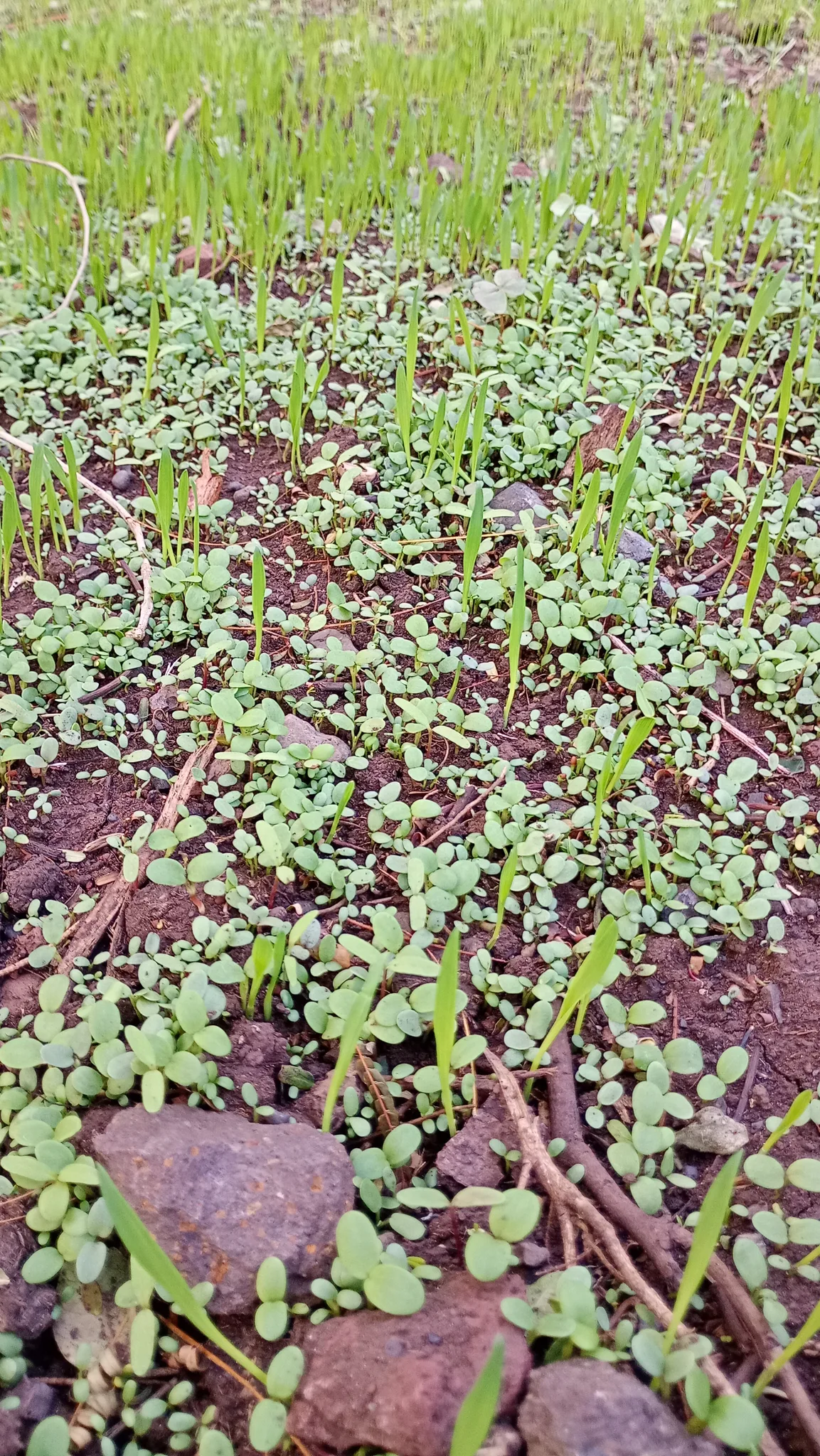
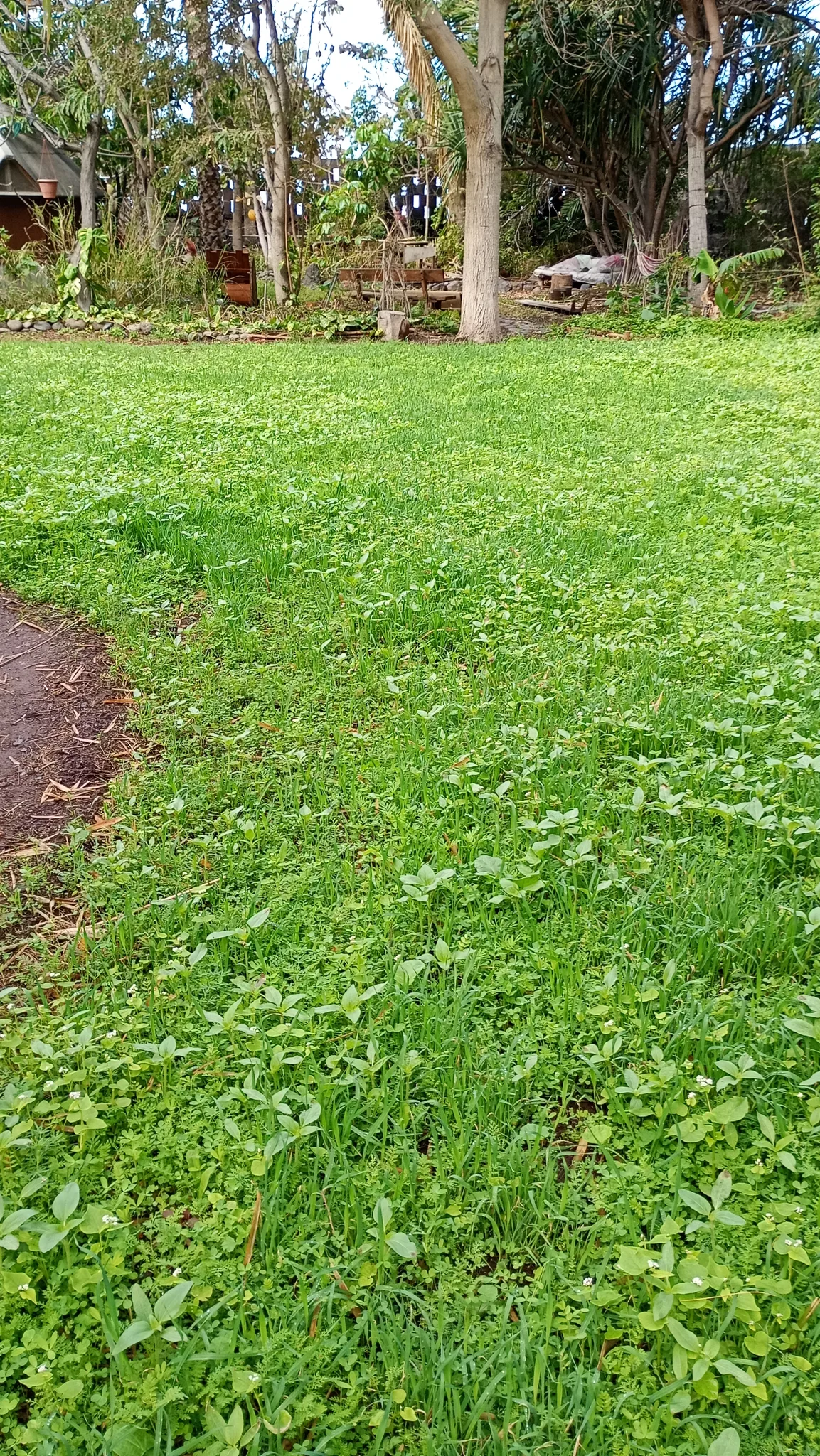
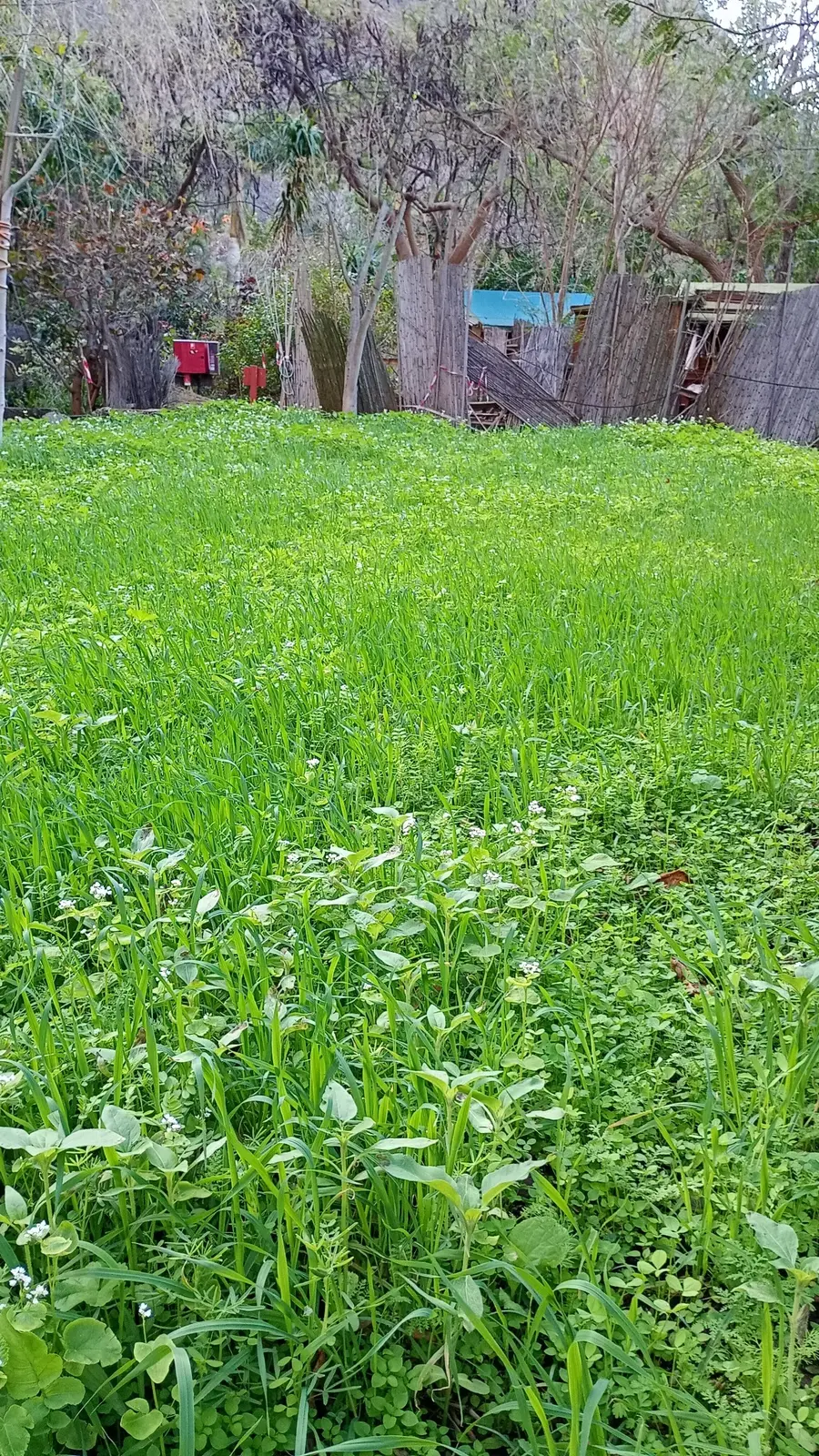
Soon after germination, many bare areas visibly began to close.
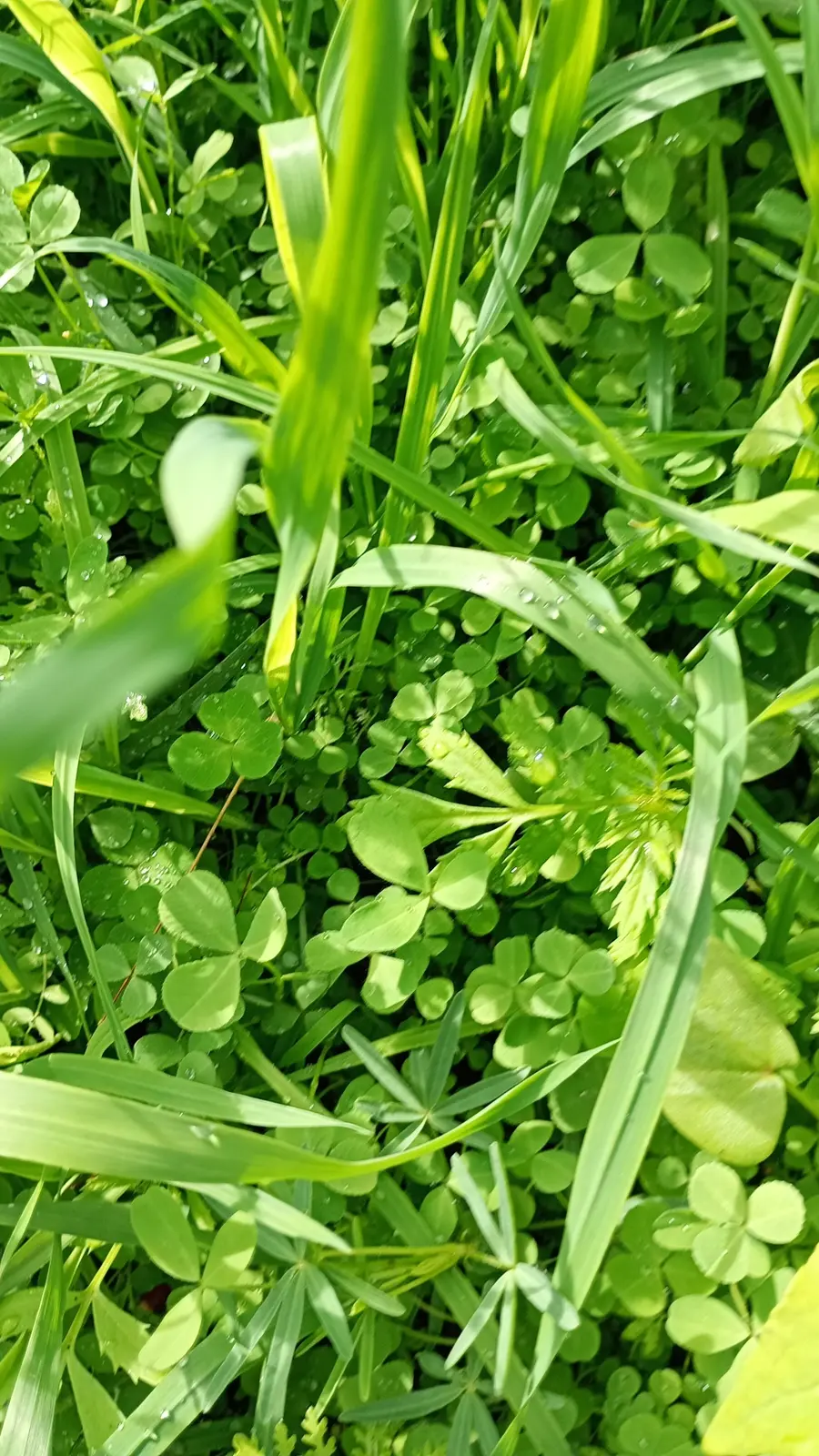
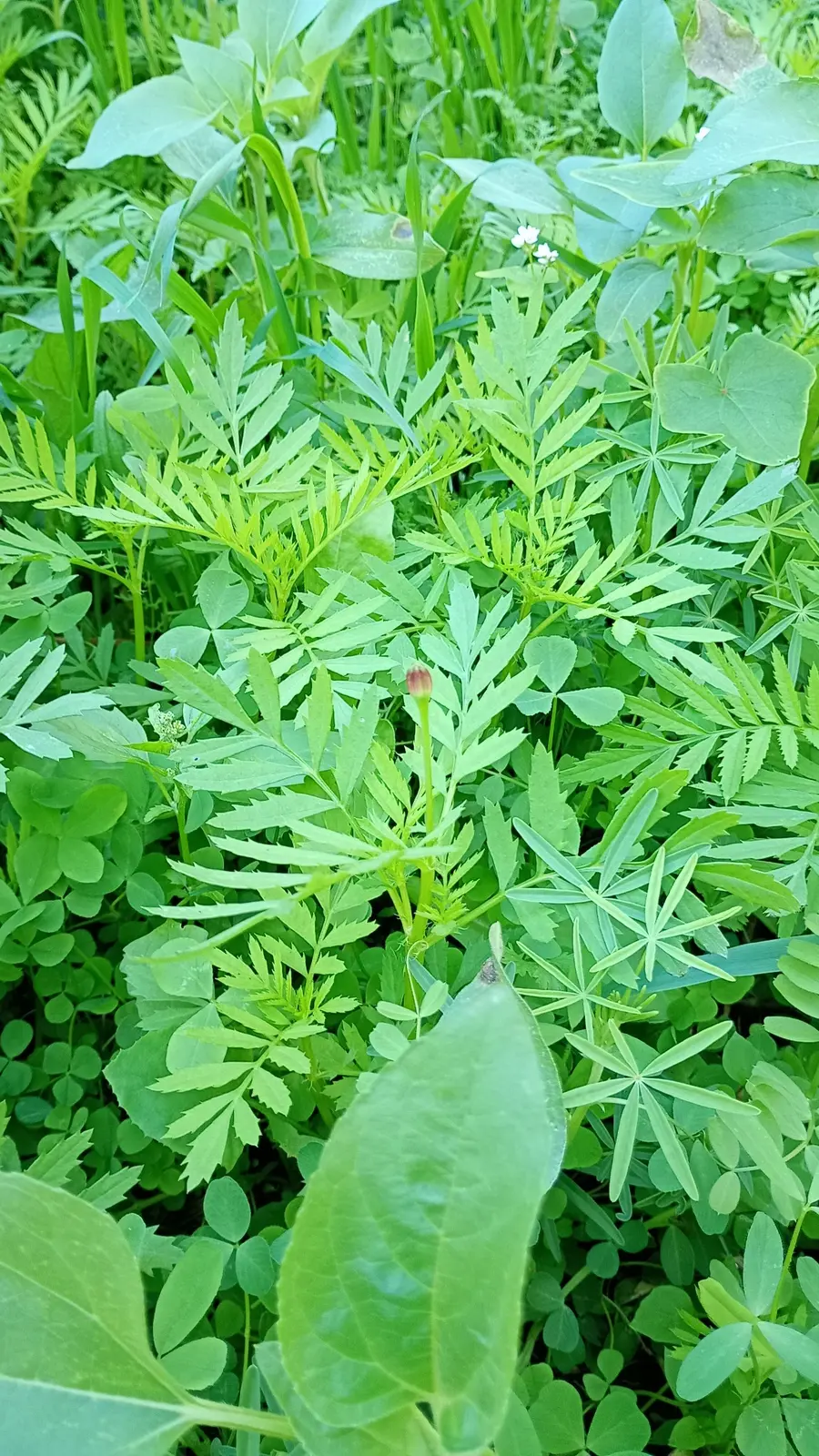
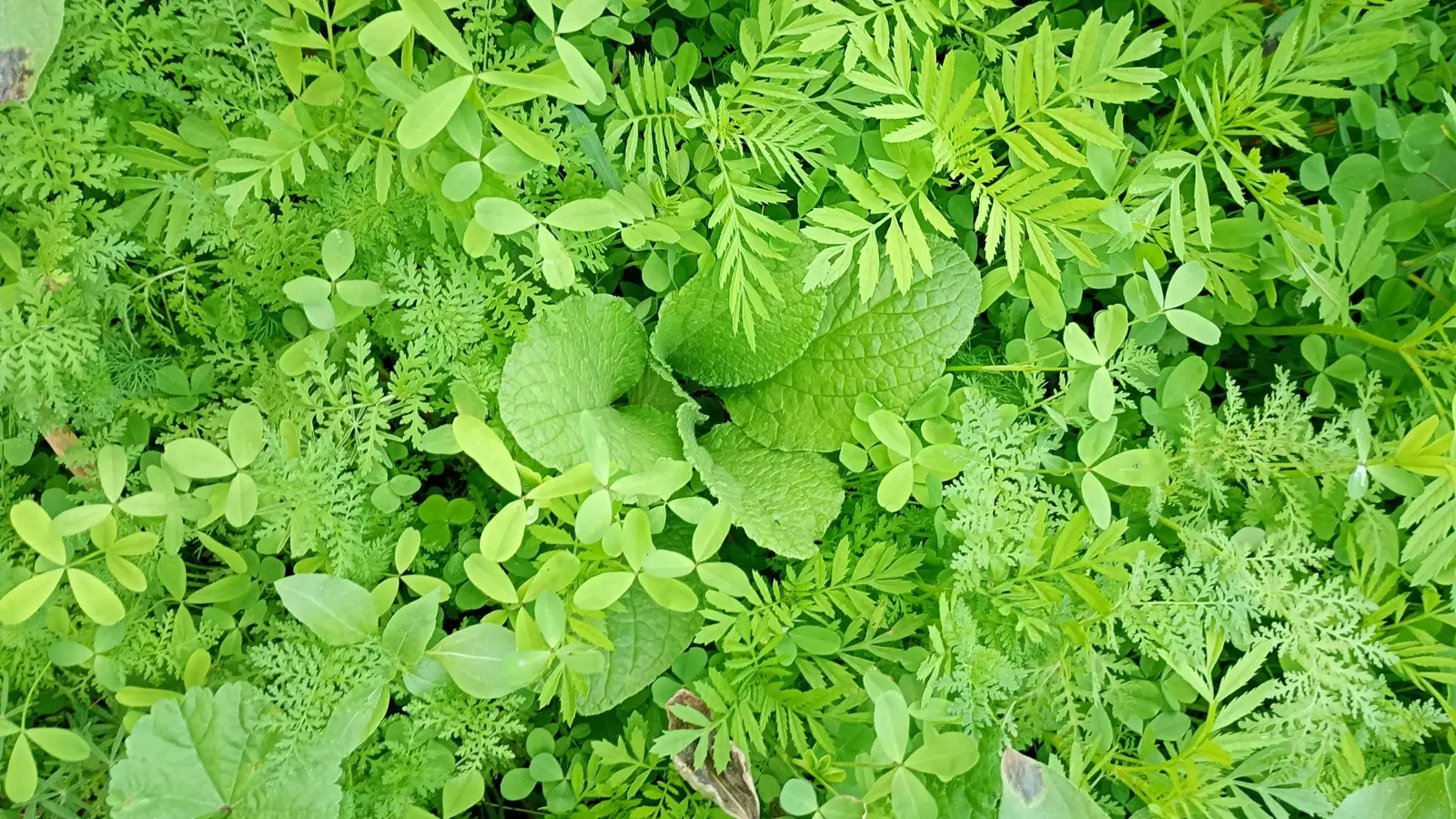
Low-growing greenery, upright grasses and broad-leaved plants formed a spatially mixed structure.
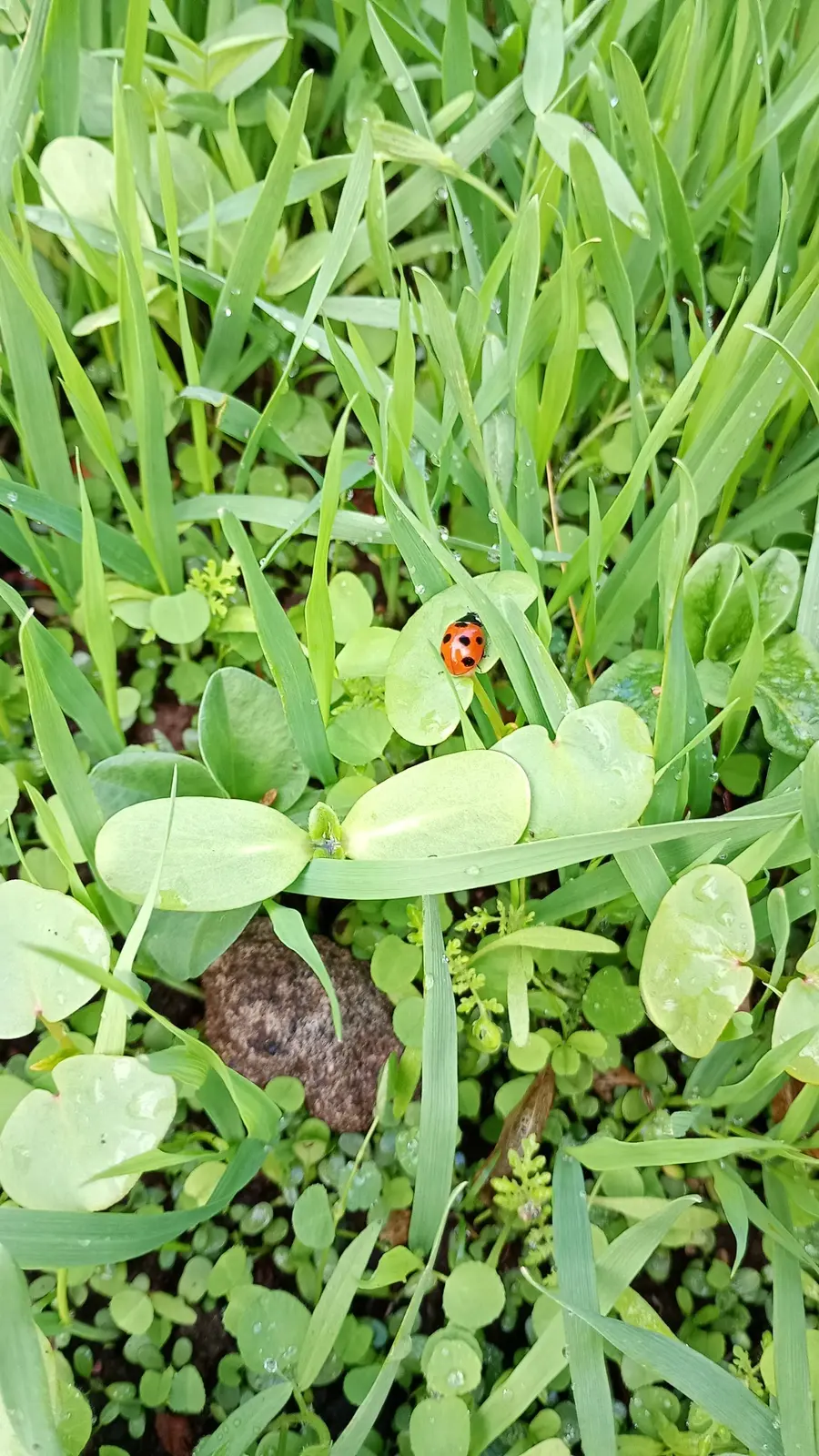
As the stand developed, flowers and individual insects documented in photographs appeared.
These observations substantiate neither a complete botanical species list nor increased biodiversity or comprehensive ecological regeneration. That would require standardised vegetation surveys and animal counts, comparison areas and repetitions over several seasons.
Inoculation and aerated compost tea
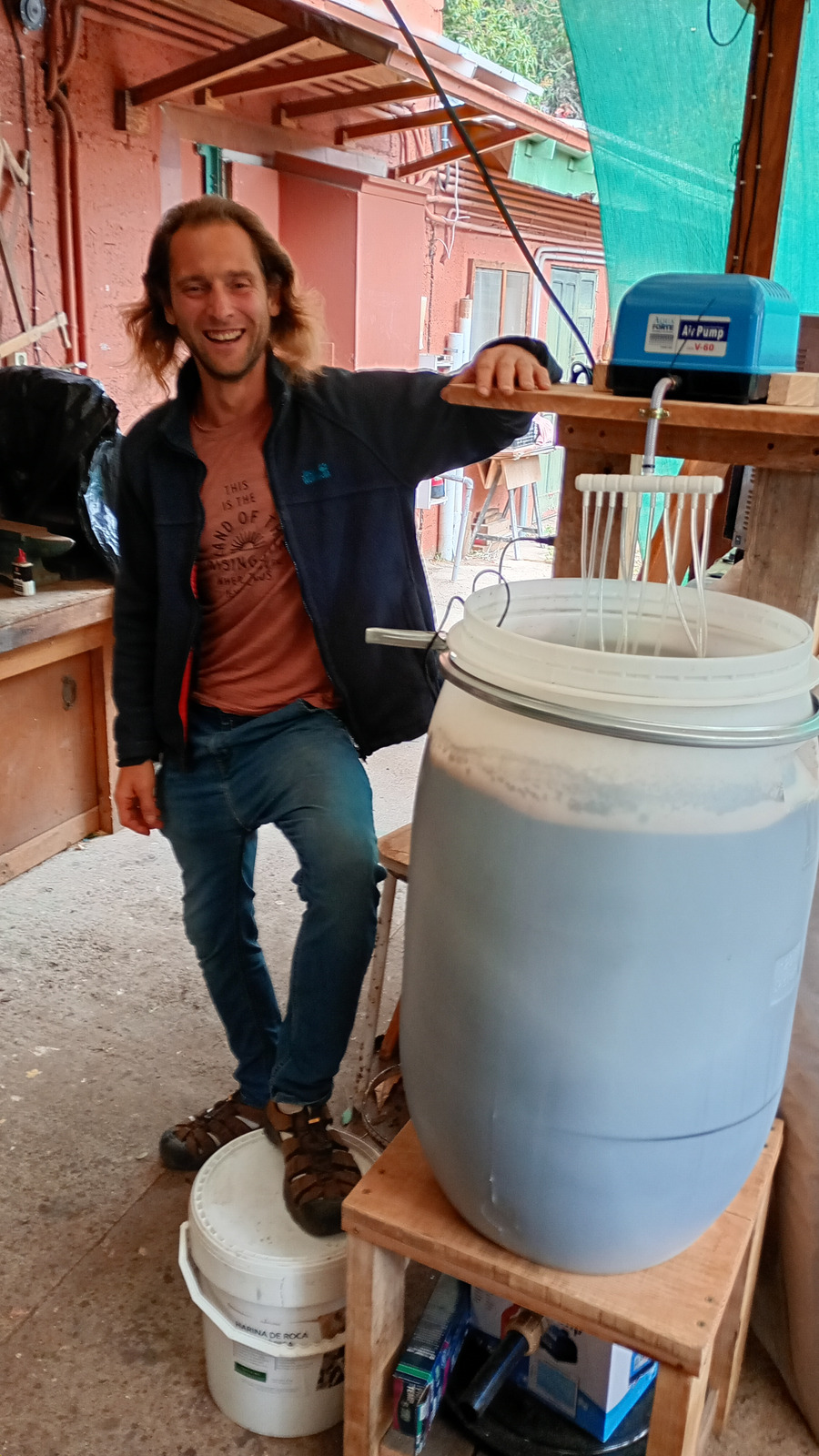
An aerated compost tea was used. The finished preparation was poured undiluted and evenly across the worked areas in order to distribute components of high-quality mature compost into the soil and root zone. Potential fields of observation included plant vitality, root development, nutrient cycling and soil structure.
What matters is not merely the number of microorganisms introduced, but whether their functions suit the site and whether they can establish under the prevailing conditions. The success of inoculation depends substantially on living roots within the system: root exudates provide a continuous supply of carbon and create rhizosphere habitats in which introduced microorganisms can establish. Suitable habitat, organic matter and appropriate moisture and oxygen conditions are also essential. Composition and effect depend heavily on the compost, production, storage, feeding, temperature, dose and application.
Because the compost tea was applied across the whole area without an untreated comparison area, its individual contribution to the development of the areas cannot be isolated.
Preparation used
| Process component | Practical application | Professional safeguard |
|---|---|---|
| Water | Chlorine-free, filtered water; document temperature and pH. | Check water quality. Simply leaving water to stand does not reliably remove every form of disinfection. |
| Starting compost | A small amount of mature, high-quality compost or humus-rich starting material. | Origin, maturity and hygiene risk are more important than age alone. |
| Aeration | Continuously aerate actively during preparation. | Measure dissolved oxygen wherever possible; demand depends on the vessel, temperature and feed additions. |
| Additions | The recipe used, based on Weißhäupl, contained molasses and mineral products, among other ingredients. | Every addition of sugar raises oxygen demand and, where contamination is present, can promote the multiplication of pathogens. |
| Duration | Approximately 24 to 36 hours for this project. | Do not stop solely by the clock; also assess odour, temperature and, where possible, oxygen status. |
| Application | Pour the finished preparation undiluted and evenly across the worked areas. | Application across the whole area reaches the soil and root zone; without an untreated comparison area, the individual effect cannot be isolated. |
This recipe is included for traceability. It is neither a universal standard nor an independently validated dosing recommendation.
Hygiene and abort signals
| Control point | Minimum standard | Warning or abort signal |
|---|---|---|
| Starting material | Mature, traceable origin, no unresolved faecal contamination. | Immature, putrid or hygienically unsafe compost. |
| Vessel and hoses | Clean after every batch and prevent biofilms. | Visible residue, slimy deposits or remnants of an old batch. |
| Aeration | Continuous; allow for increased oxygen demand when feed is added. | Anaerobic or putrid odour, pump failure or uncontrolled heavy foaming. |
| Sugar addition | Only with a justified recipe and a high level of process control. | If initial hygiene is unclear, do not use molasses. |
| Application | Assess risk according to crop, harvest time and application route. | No uncontrolled foliar application to edible plant parts. |
Start small in future comparisons
If the individual effect of a future application is to be investigated, a small test area, an untreated comparison area and, wherever possible, only one variable component are appropriate. Morning or evening, low UV exposure and suitable moisture can provide more favourable survival conditions for introduced organisms; this does not establish a site-specific effect. Application should be even and as gentle as possible.
The information to document includes soil and area ID, recipe, starting compost, start and finish times, temperature, oxygen and process observations, undiluted or diluted application, total volume, treated area, actual quantity per square metre, weather, soil moisture, irrigation, crop stage and standardised follow-up observations. Litres-per-hectare figures are not transferable without a defined recipe, concentration and application volume per area. Concentration, salt load and microbial metabolites may also be relevant to the response.
These were the questions that guided implementation
| Working hypothesis | Expected signal | Counter-check and confounding factors |
|---|---|---|
| H1 · Compost and cover improve establishment. | More even emergence and less bare surface. | Irrigation, seed quality, shade and bird feeding can influence the same appearance. |
| H2 · One-off loosening facilitates establishment. | Better seed-to-soil contact and lower penetration resistance. | Moisture during cultivation, renewed settling and differing initial compaction; penetration resistance was not measured systematically. |
| H3 · A functional mixture increases spatial use. | Different growth forms and longer-lasting cover. | Dominance by a few species, seasonal suitability and uneven seed distribution. |
| H4 · Supplementary preparations provide added value. | Measurable difference from an otherwise identically treated comparison area. | Cannot be tested without a suitable comparison; batch and process variability remain relevant. |
From the work plan to daily practice
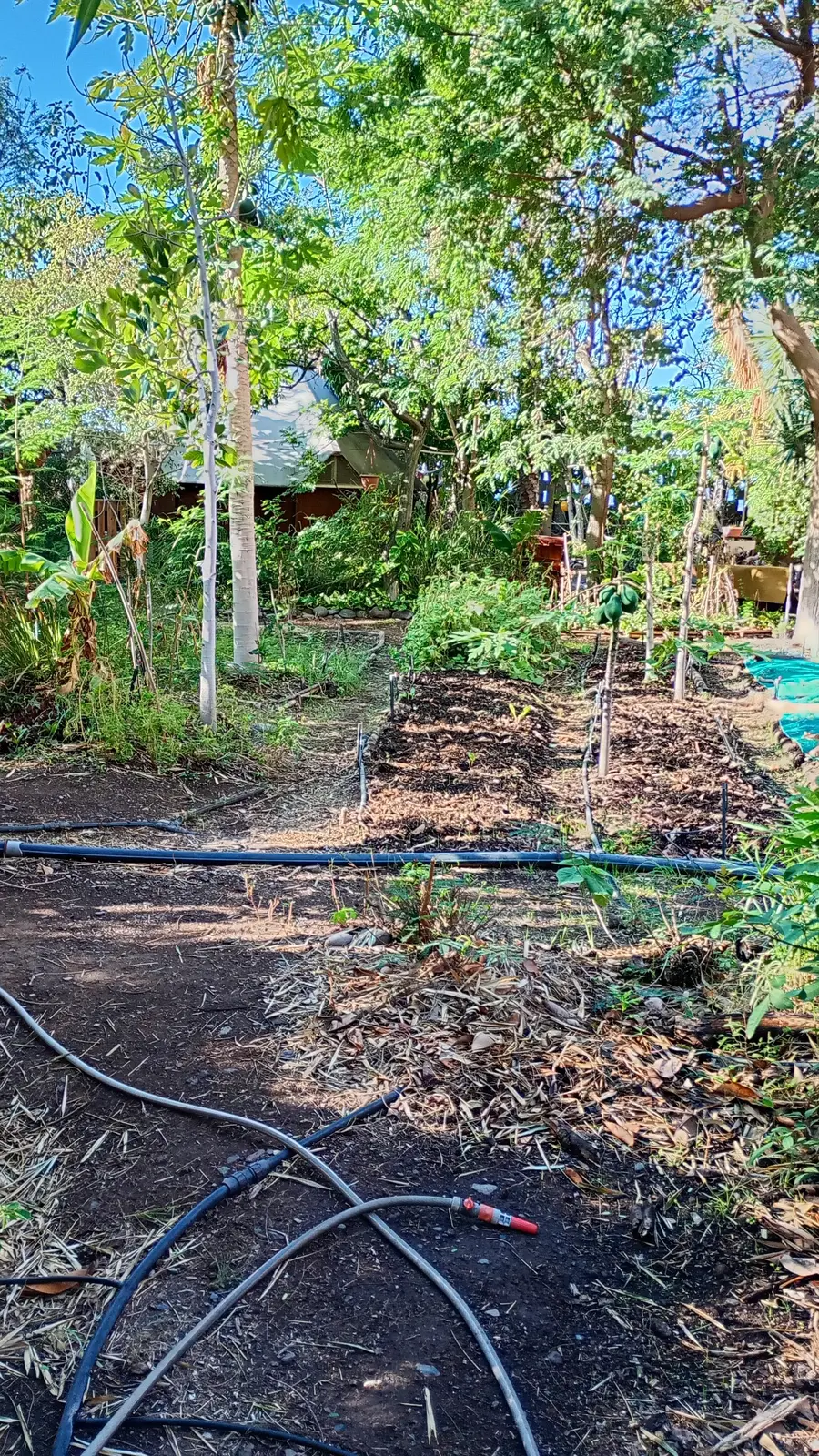
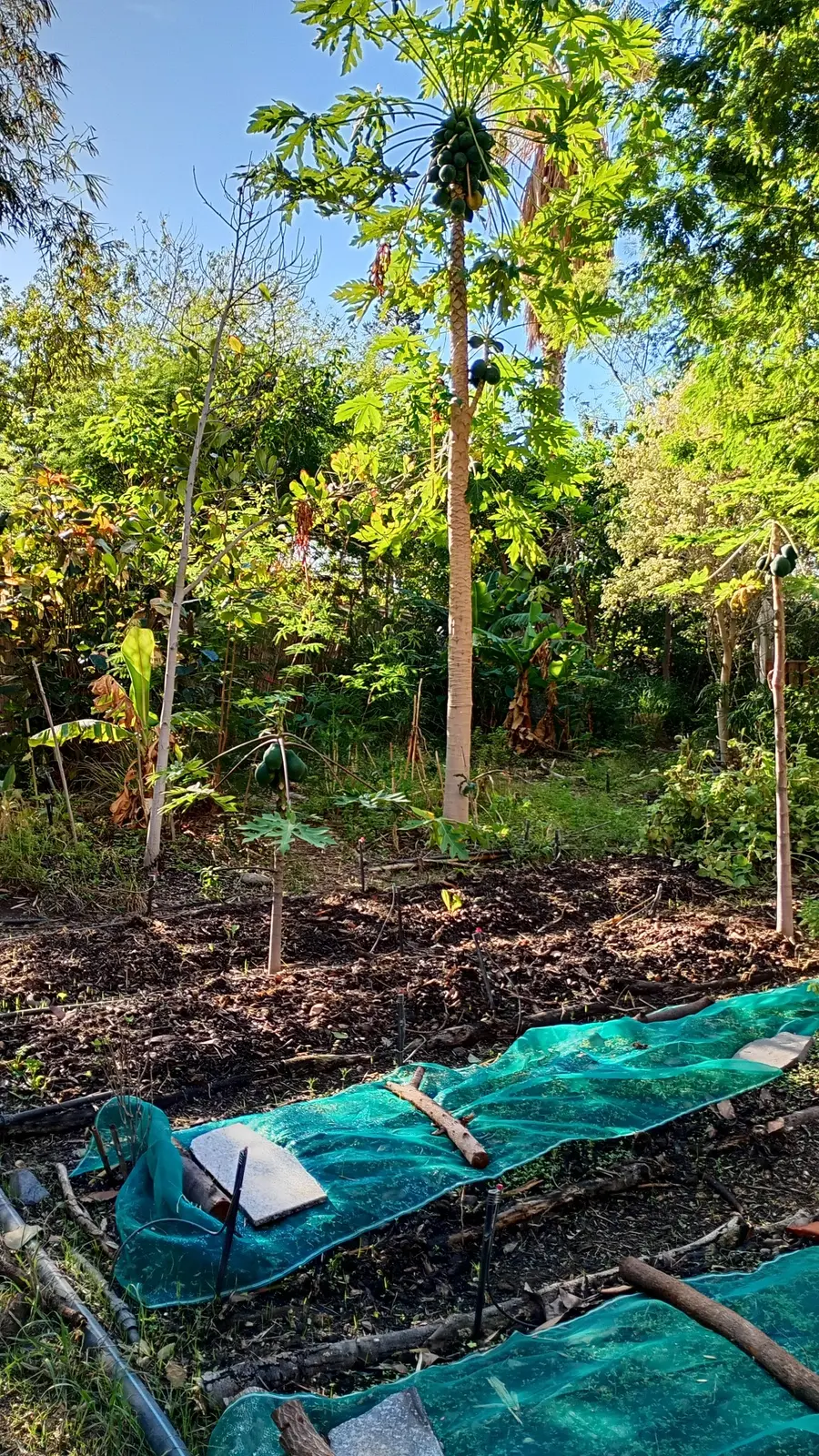
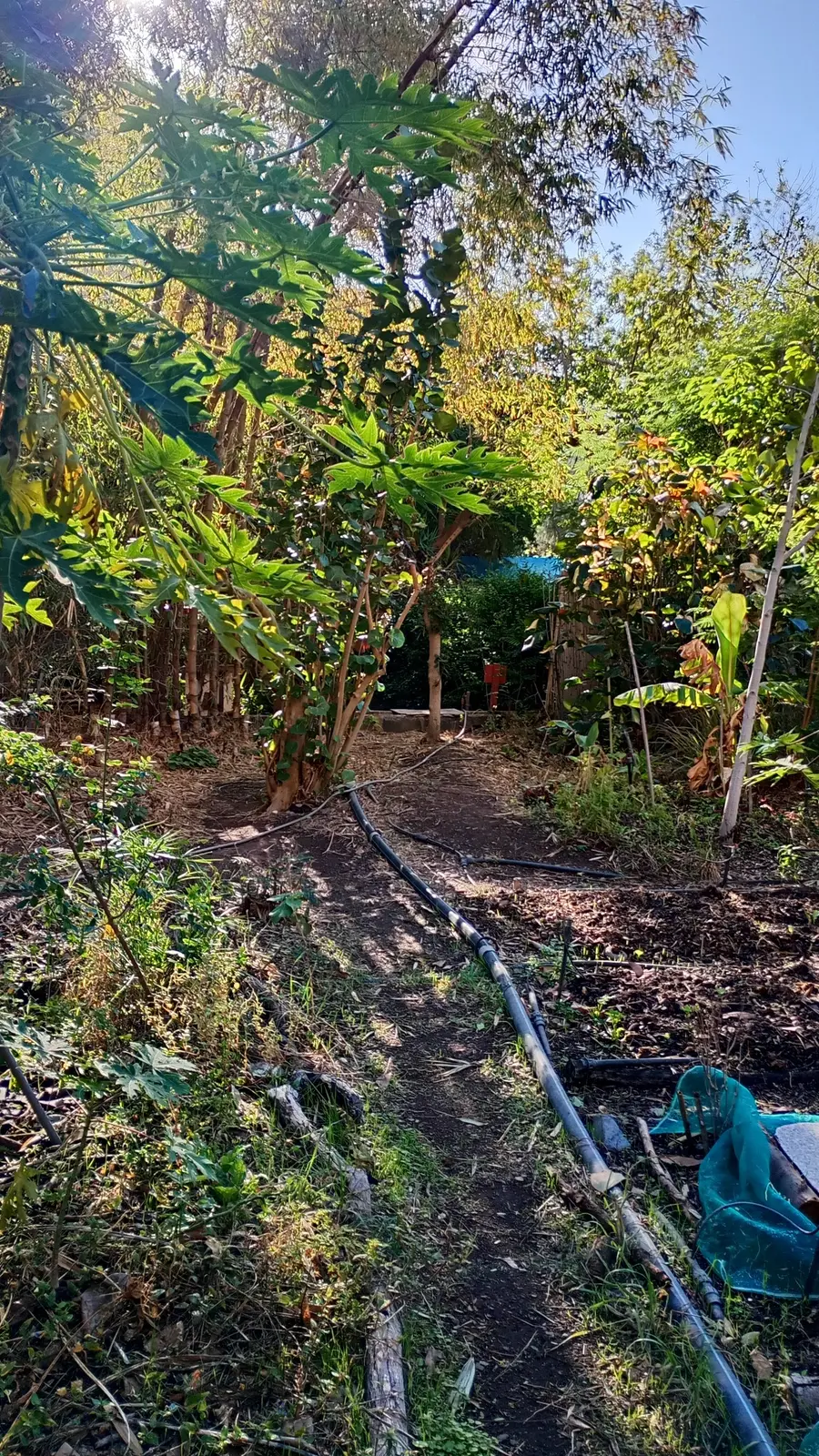
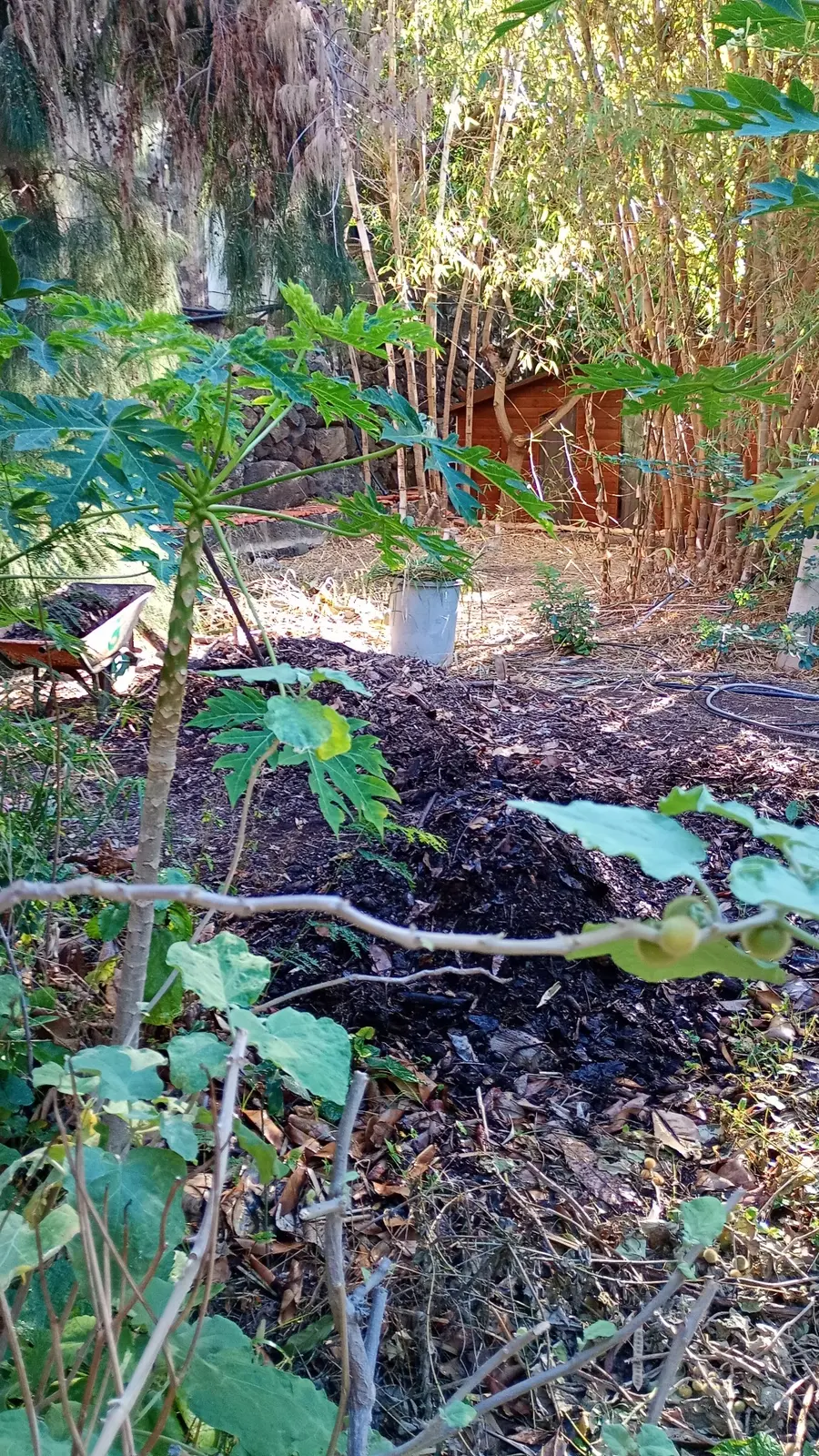
During implementation, planning steps became manual work: moving materials, opening the soil, sowing, irrigating and then observing how the two areas responded. Even the initial photographs show that a few metres and a different viewing direction produced a different picture. Woody plants, bare zones, light, shade, vegetation and infrastructure required decisions at each specific microsite.
Organic material had already been prepared in parts of the areas, while larger sections remained bare. Trees and plants were assessed selectively; some were retained, while others were removed and returned as biomass. Irrigation pipes and existing structures had to be exposed or removed for the practical work.
Chronology of the visible development
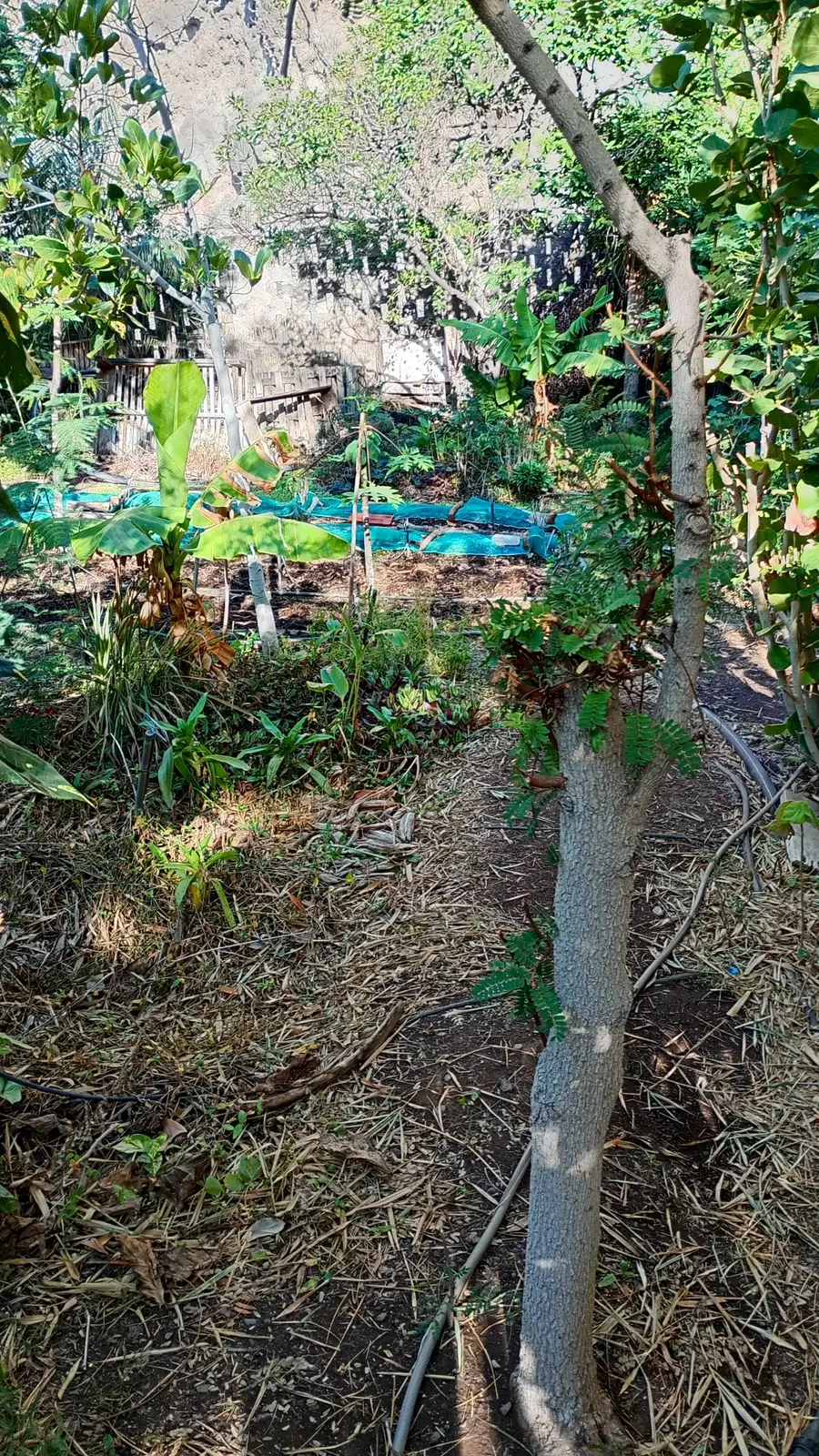
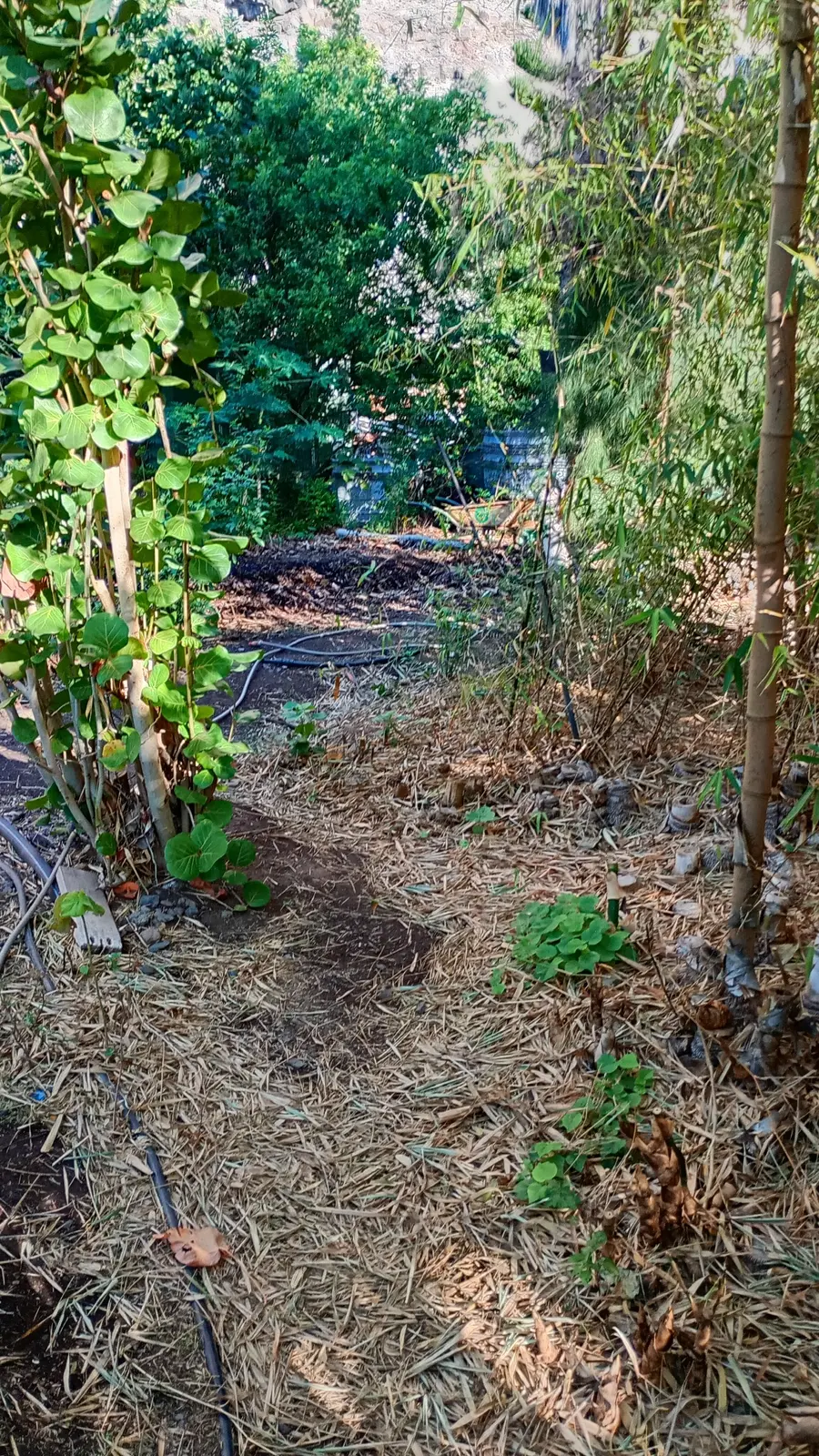
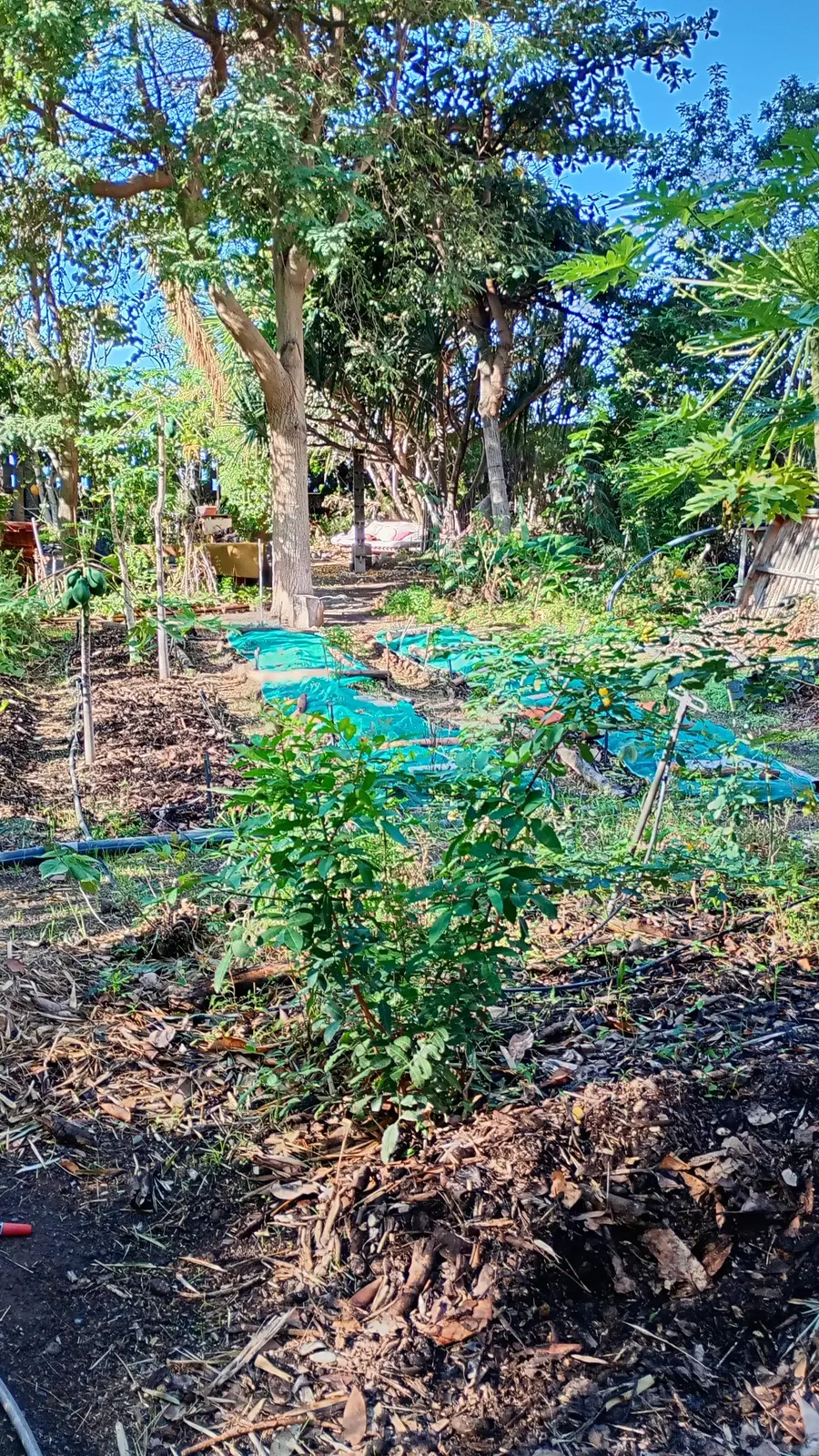
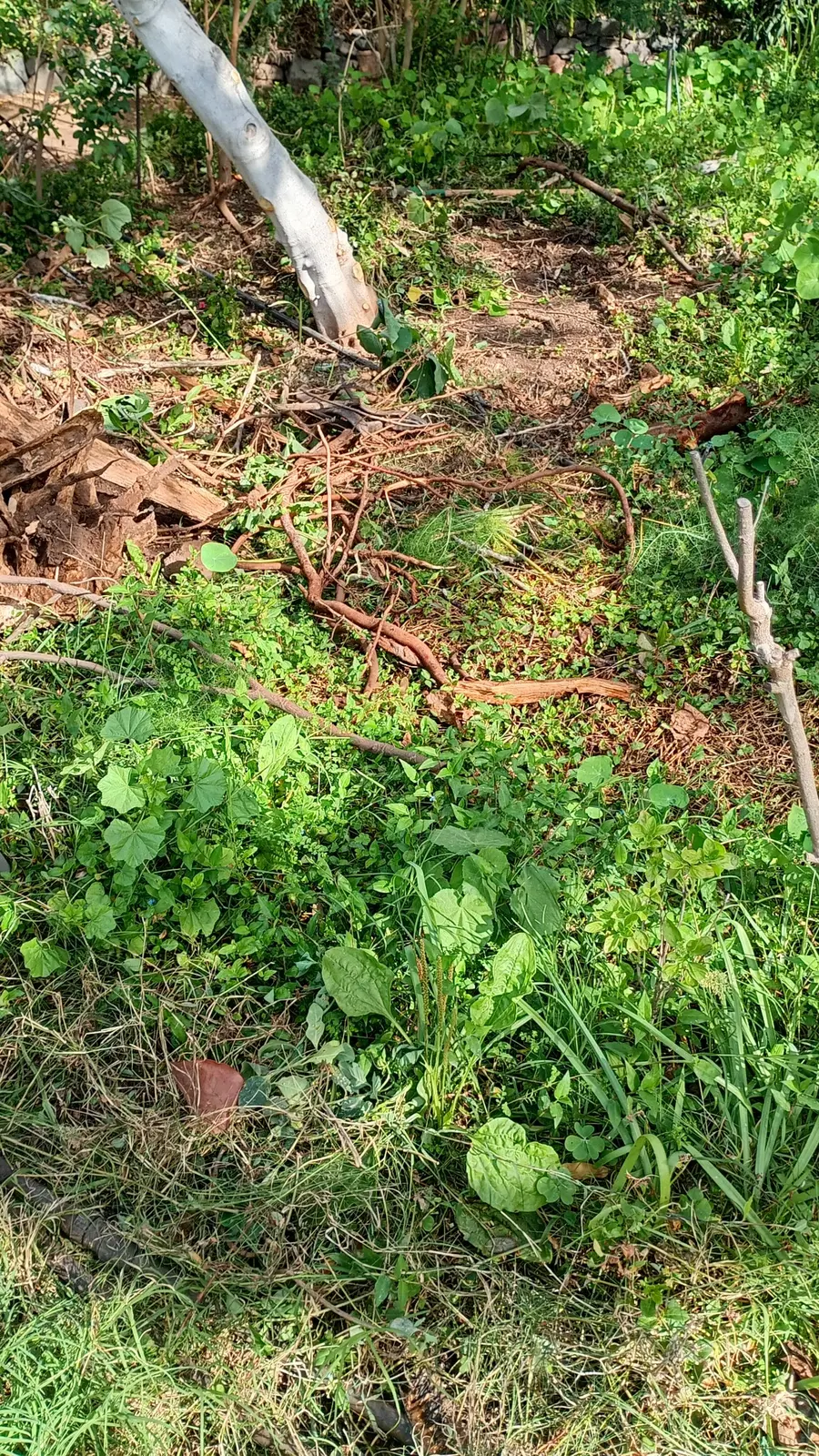
- Baseline series. Ten photographs show bare and patchily vegetated areas, existing woody plants, pipes and highly variable microsites. The images are qualitative references without standardised photo points.
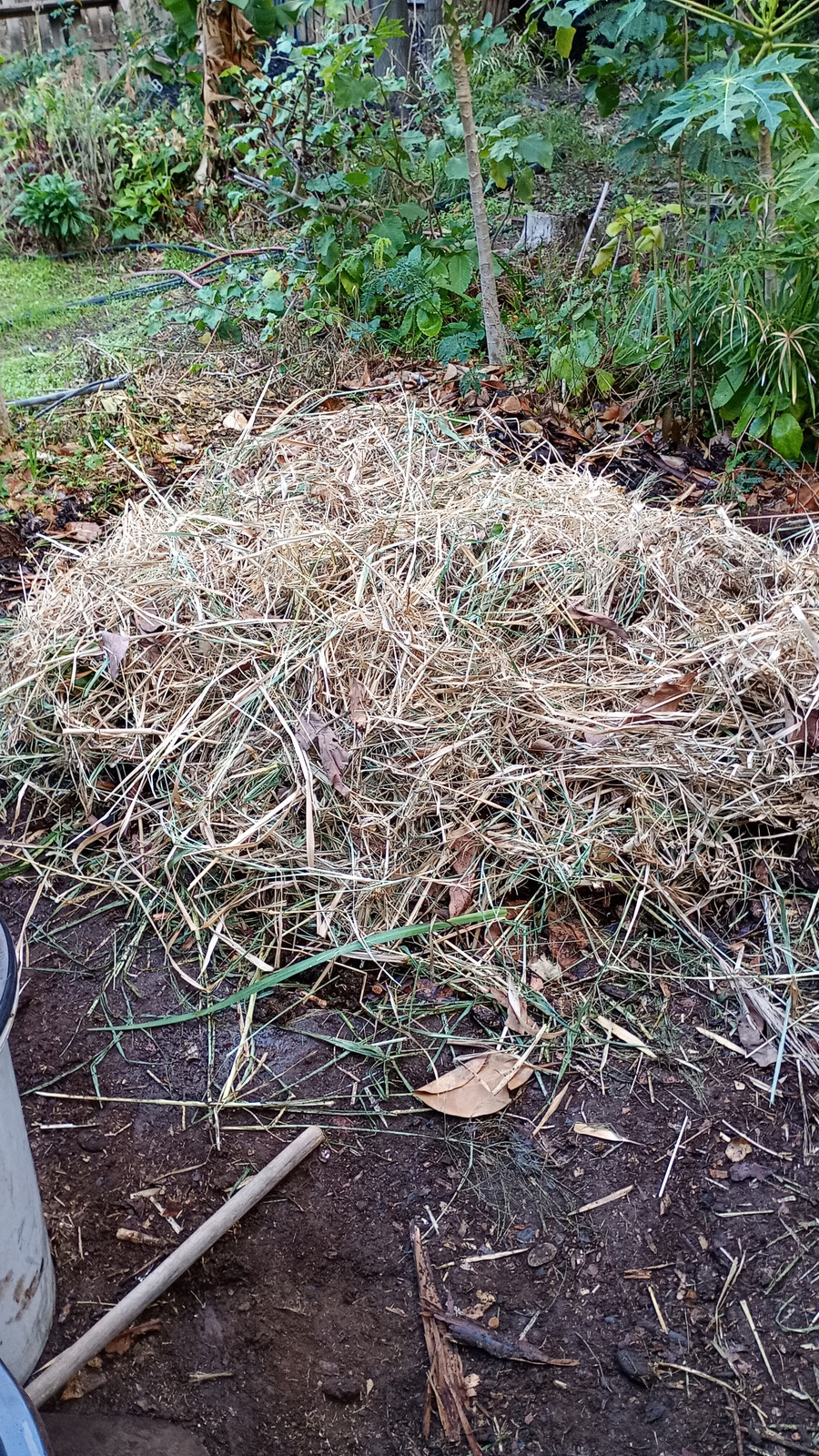
- Structural material, wetter and N-richer components and the fully constructed pile were documented in a sequence of images dated 25 December 2025.
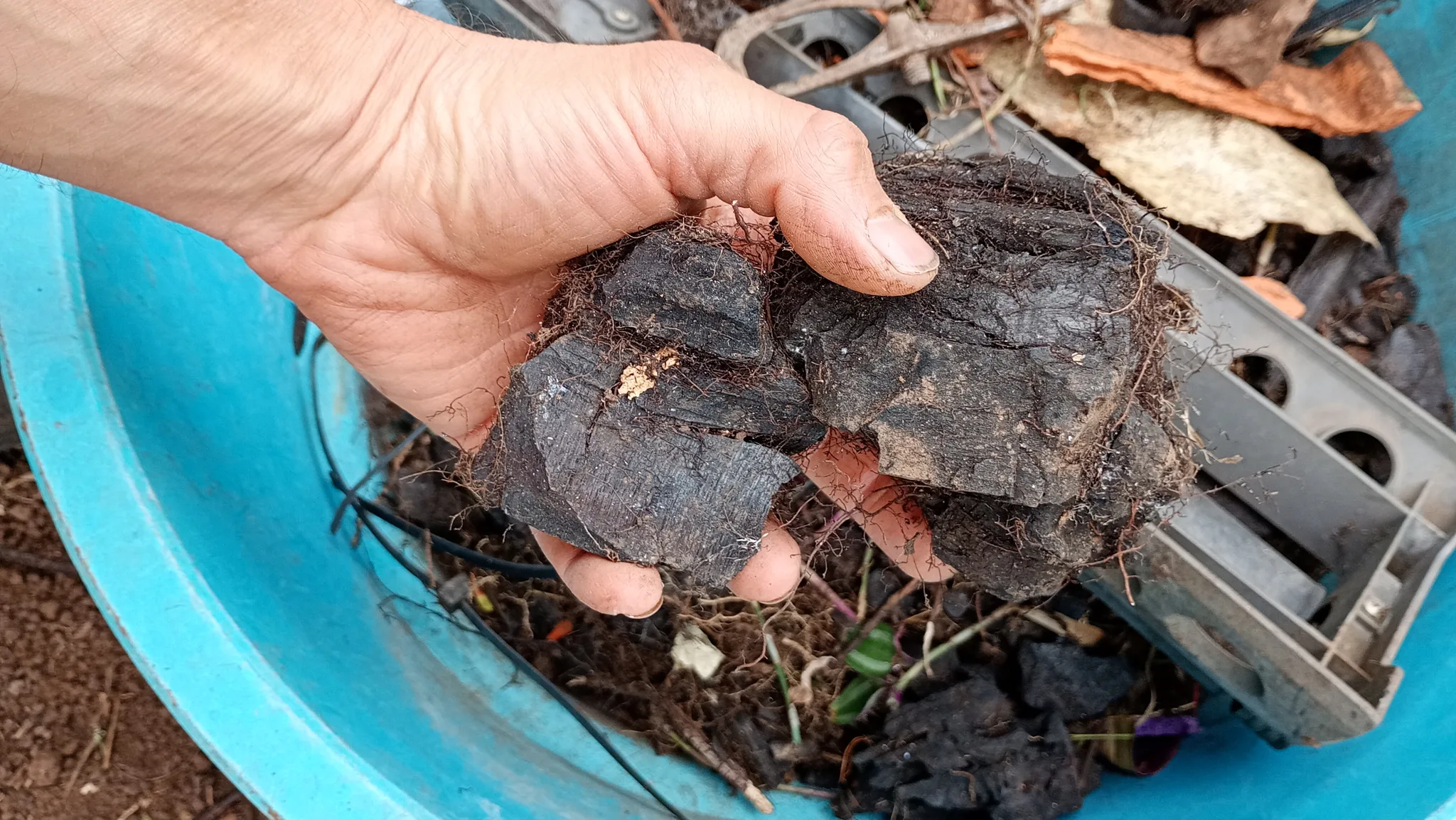
- Site exposed. A photograph shows the opened soil area; images from the same sequence document biochar, charred wood and organic residues. The decomposition process cannot be diagnosed from the image alone.
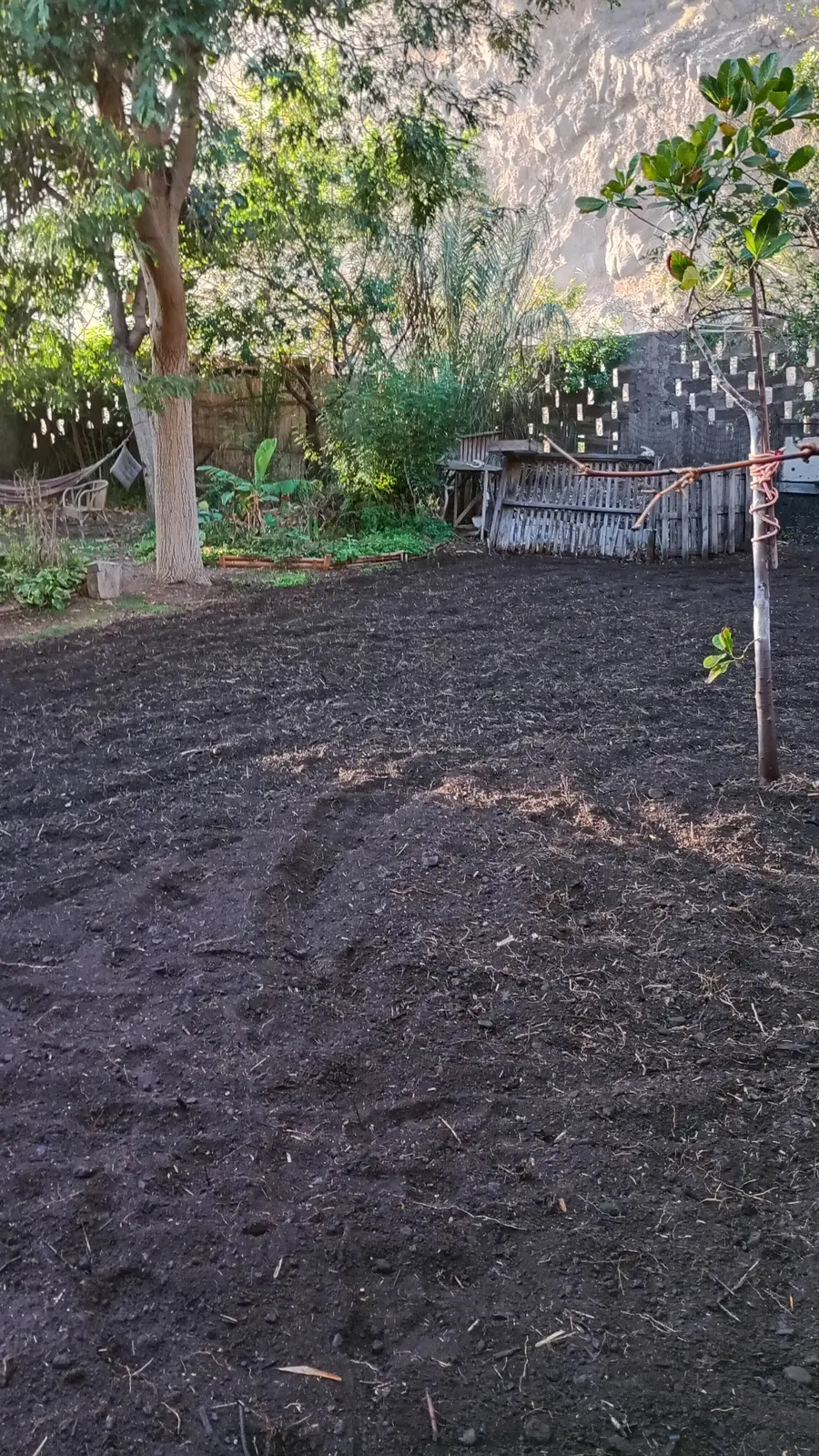
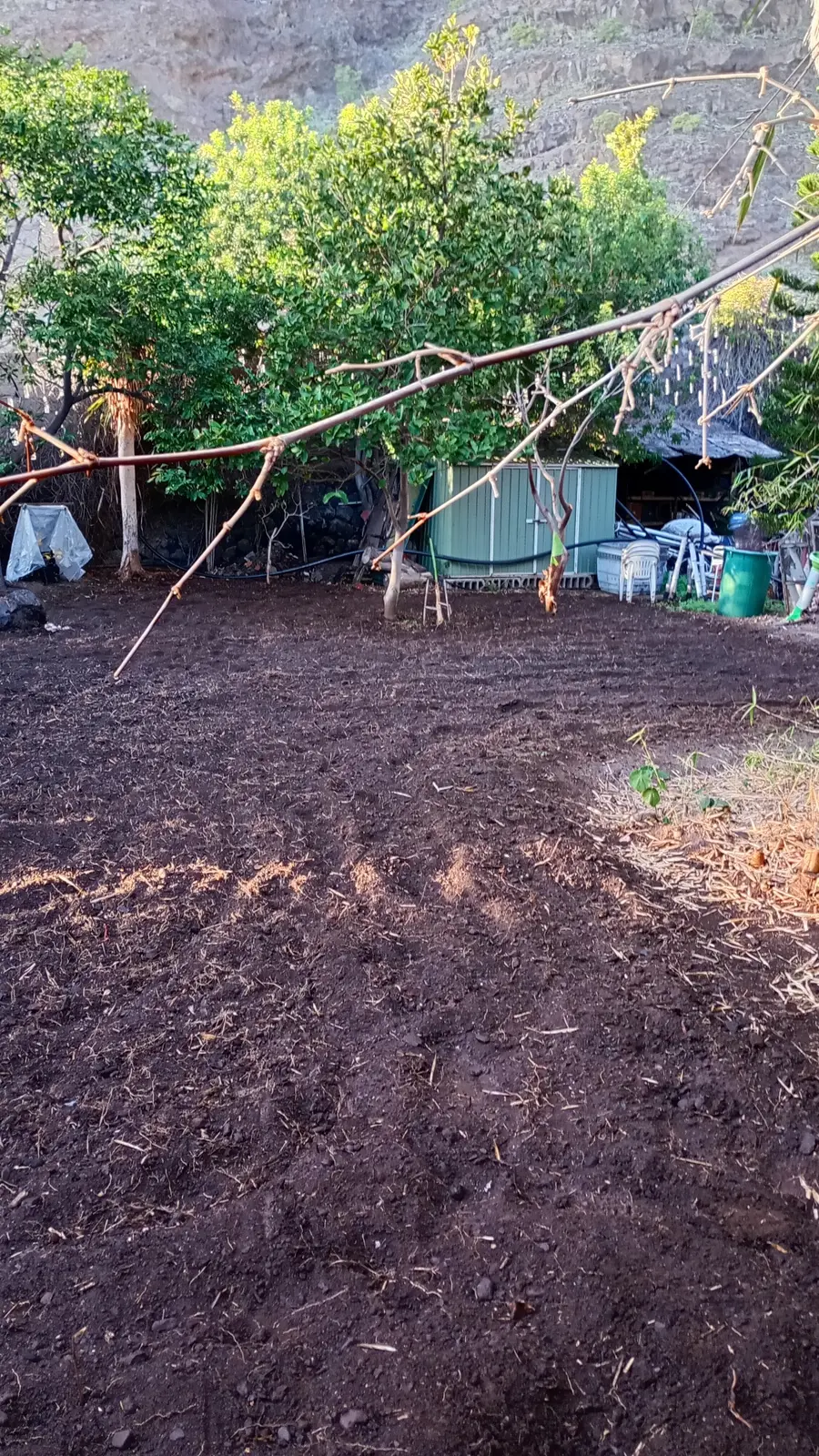
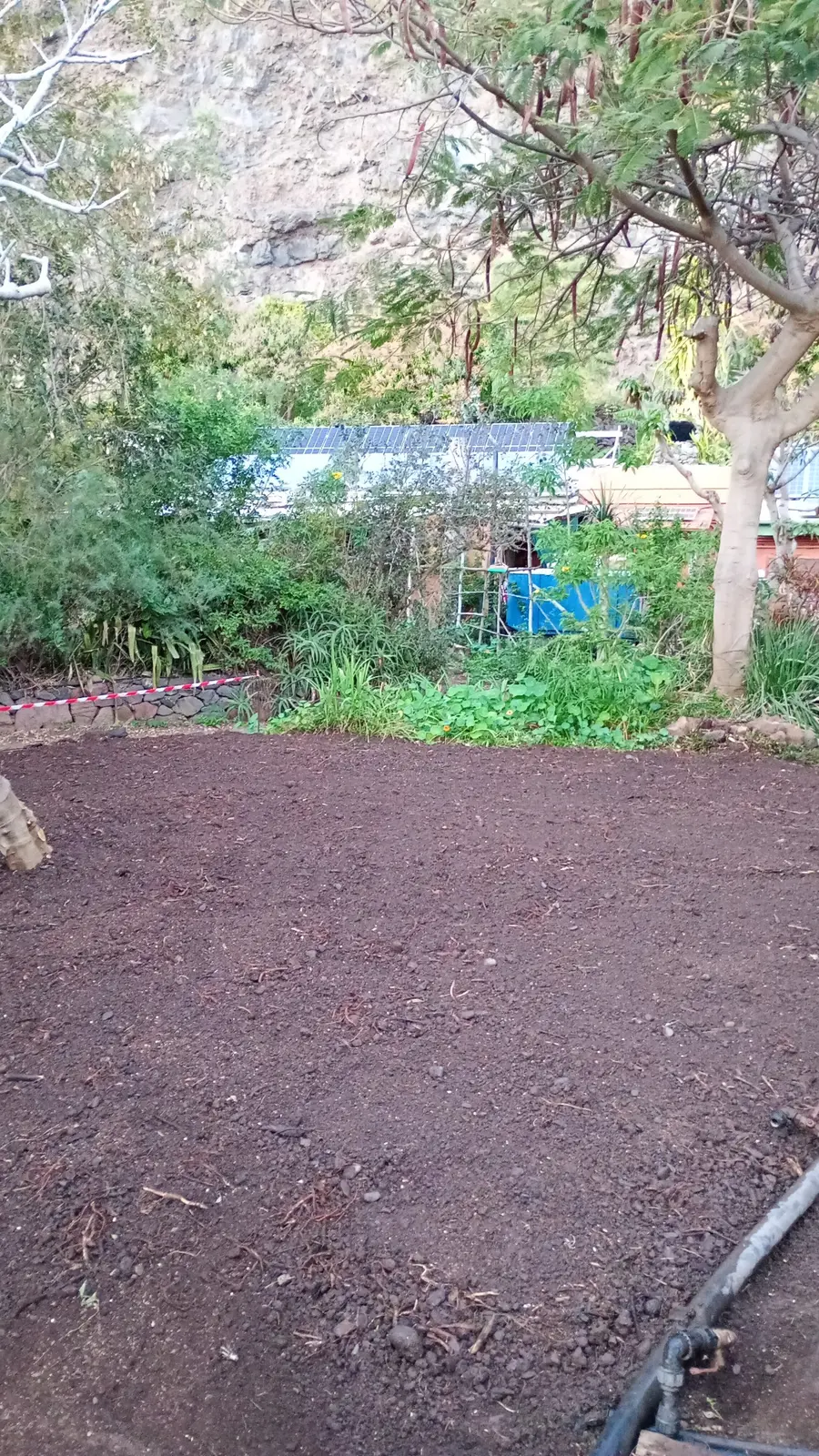
- Area prepared. The cultivated surface was bare and appeared evenly ready for sowing from two adjacent viewpoints. An improvement in structure or water uptake cannot be measured from this.
- Still before sowing. Two photographs show the prepared, largely bare surface. Cultivation and sowing must be distinguished in time.
- Young plant cover. Seedlings began to colonise the bare soil, including around existing woody plants; different seedling forms grew alongside one another.
- Broad green cover. In one area, the soil already appeared almost completely covered. A second perspective simultaneously showed that density and growth height still varied.
- Bare soil recedes. Around three weeks after soil cultivation, the new plant cover dominated the view. This is an early functional signal, not long-term evidence.
- An individual visitor. A ladybird was photographed among young grasses and herbs.
- Denser stand. A before-and-after image pair shows a much more extensively covered, multilayered surface. Perspective and framing limit quantitative statements.
- Several growth layers. Grasses, broad-leaved plants and flowers formed a dense mosaic; further ladybirds were photographed.
- Colour and flower visitors. Flowers and individual visitors expanded the visible picture. No change in biodiversity can be calculated from this without a standardised survey.
- Lush growth. The epilogue photographs date from May 2026. Formerly bare areas were barely visible beneath dense greenery.
Development in selected images
The selection shows the change over time without interpreting every image individually as the result of a specific cause. Light, season, focal length, camera height and perspective were not standardised. The photographs document conditions and a visible development.
Initial situation · Before photographs
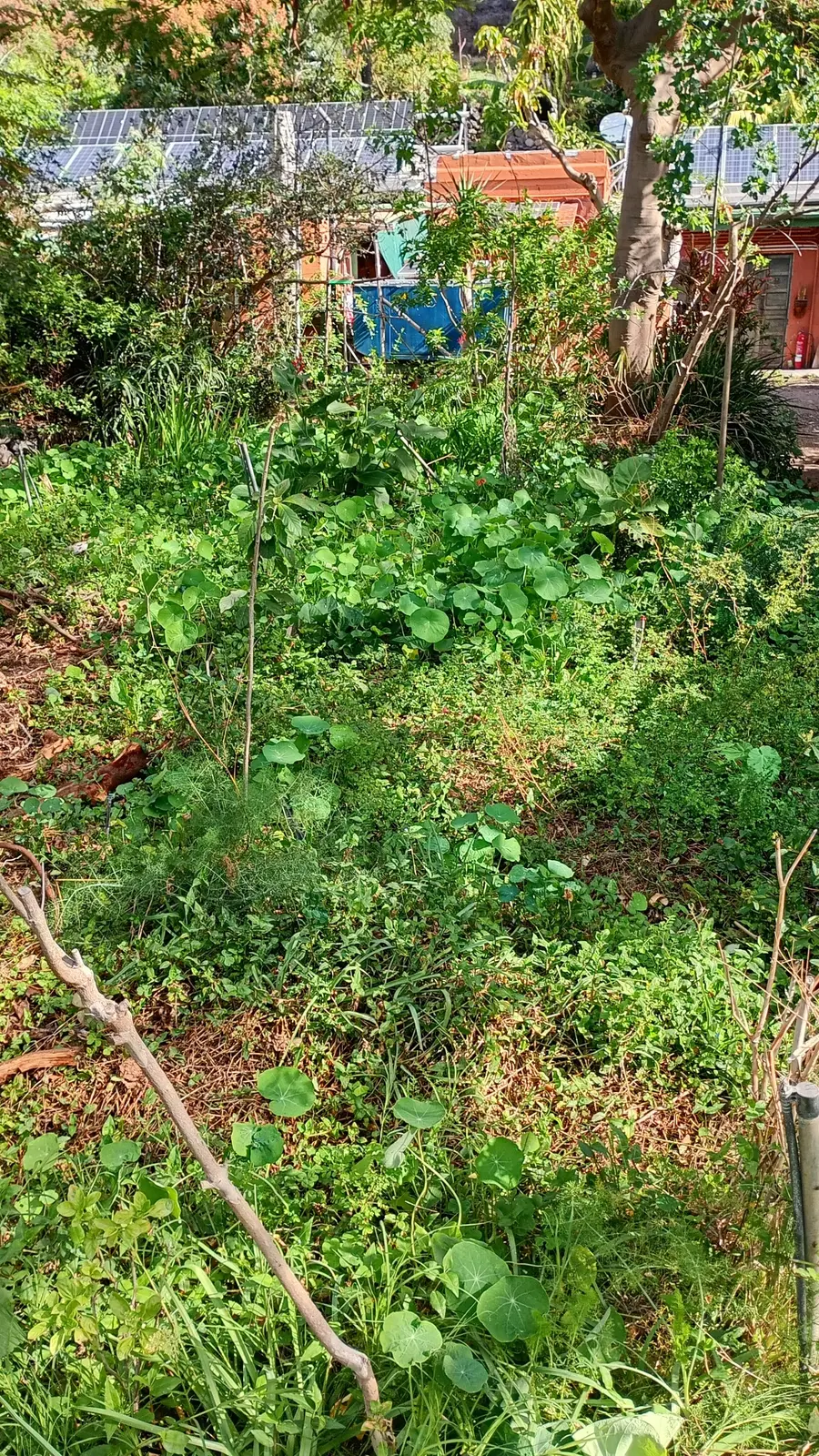
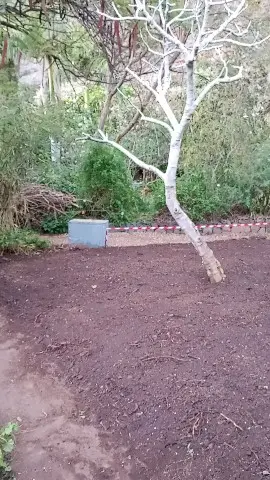
The before series shows the two bare sub-areas from several viewing directions. Existing woody plants, paths, irrigation pipes and the unevenly covered soil surface remain recognisable in their spatial context.
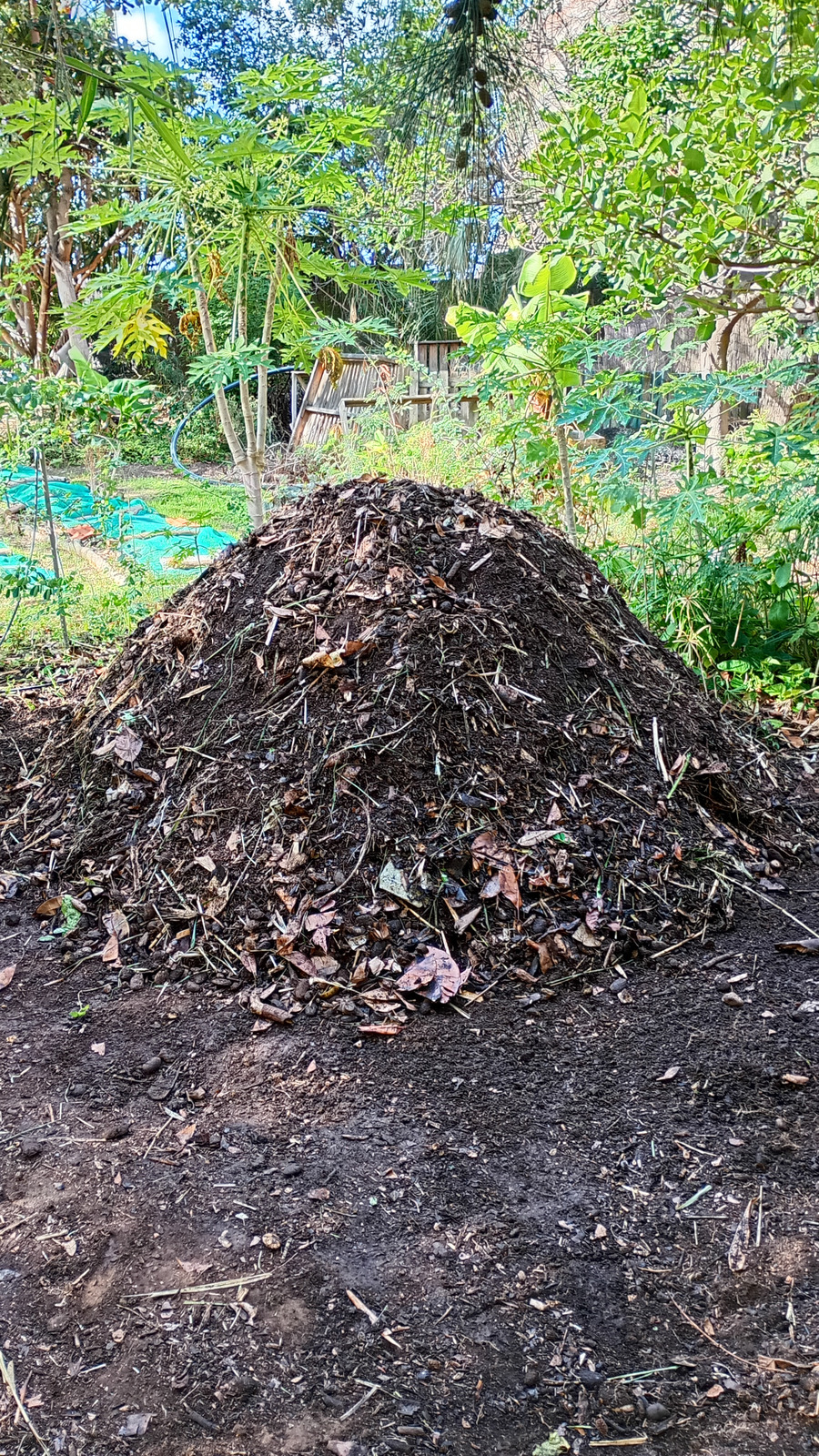
Berkeley compost · 25 December 2025
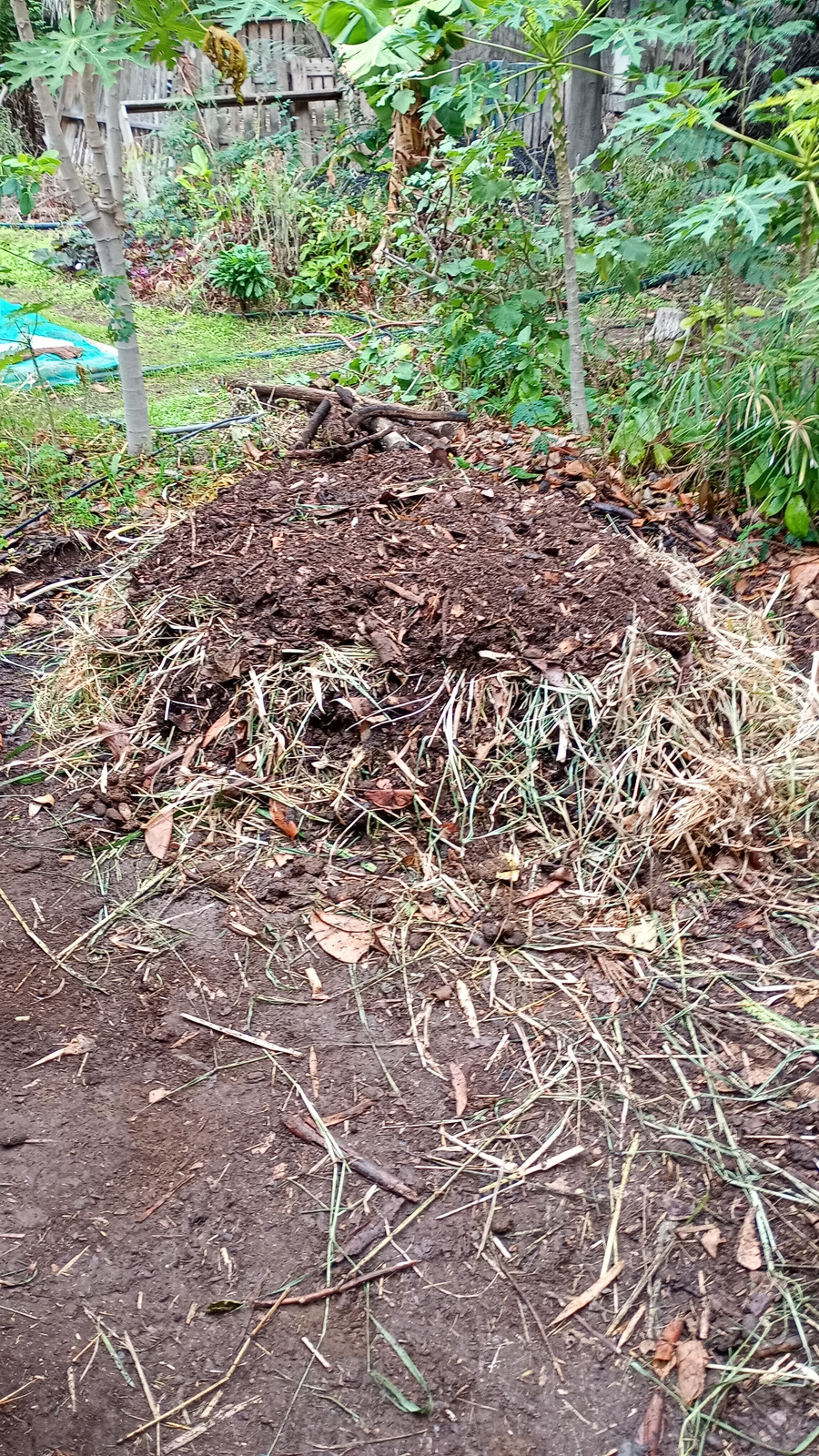
Manual work and discovery sites · undated / January 2026
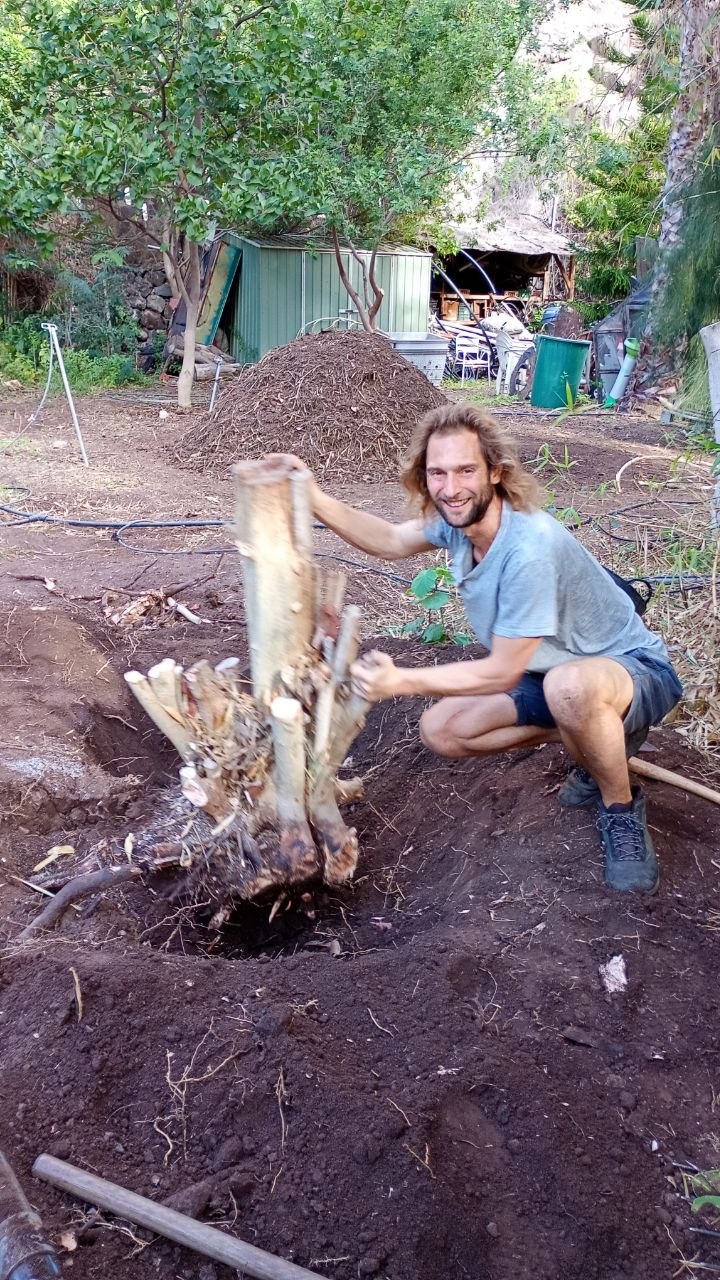
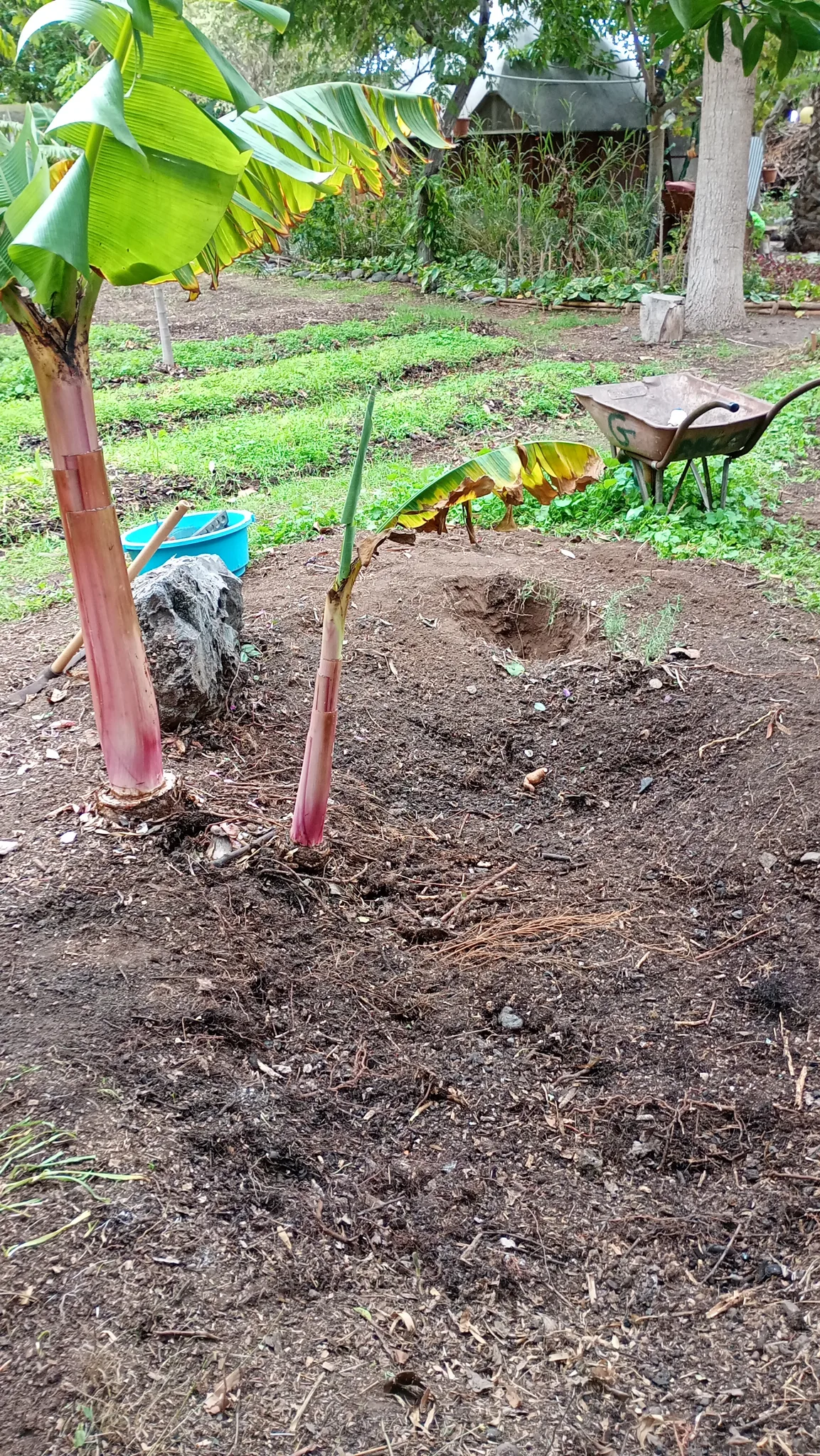
The work photograph shows the manual exposure and removal of a rootstock. The sequence from 27 January documents the opened area, together with biochar, charred wood and organic residues. The images show the finding, not its cause or the microbial process.
Development from February 2026
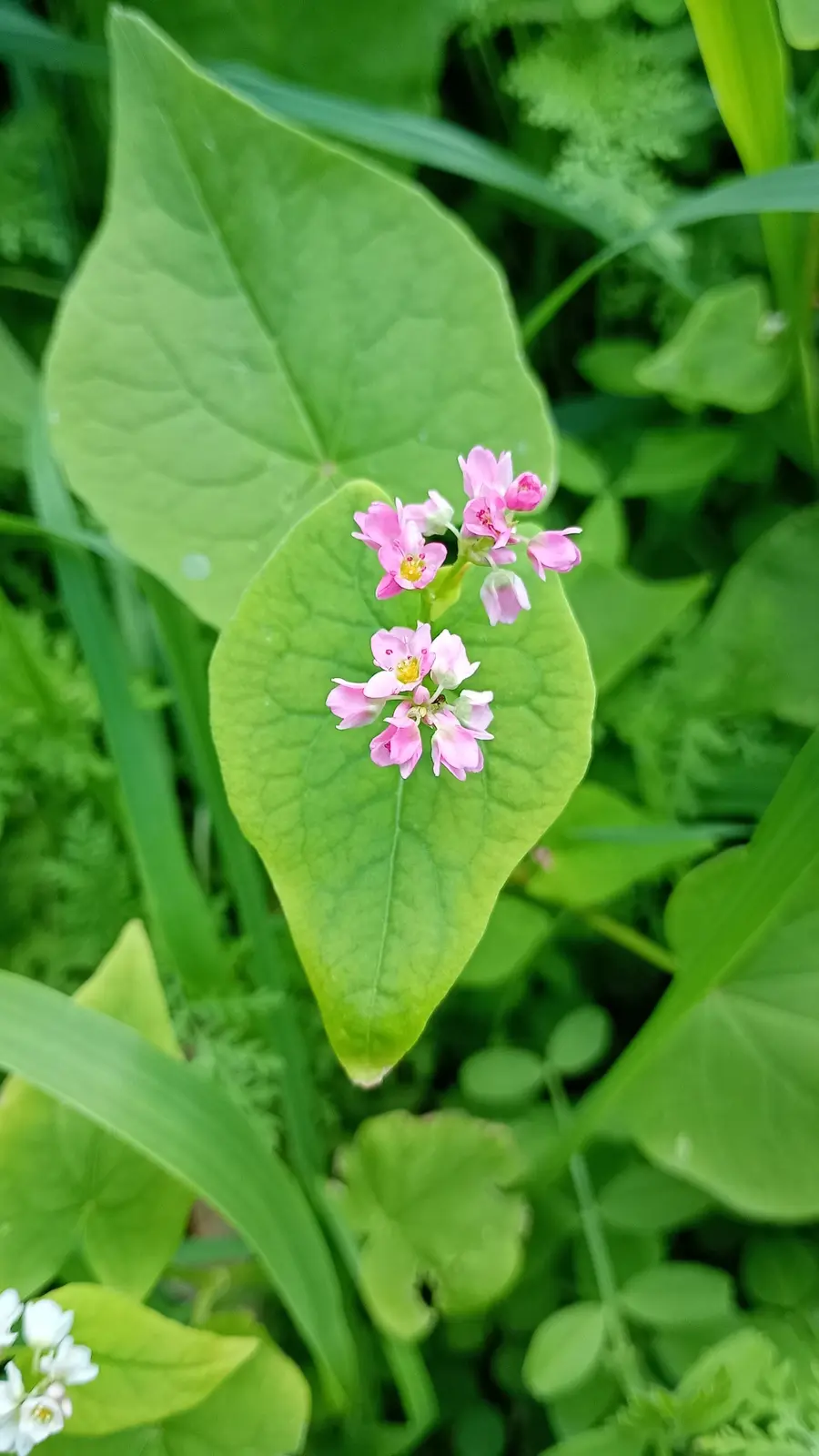

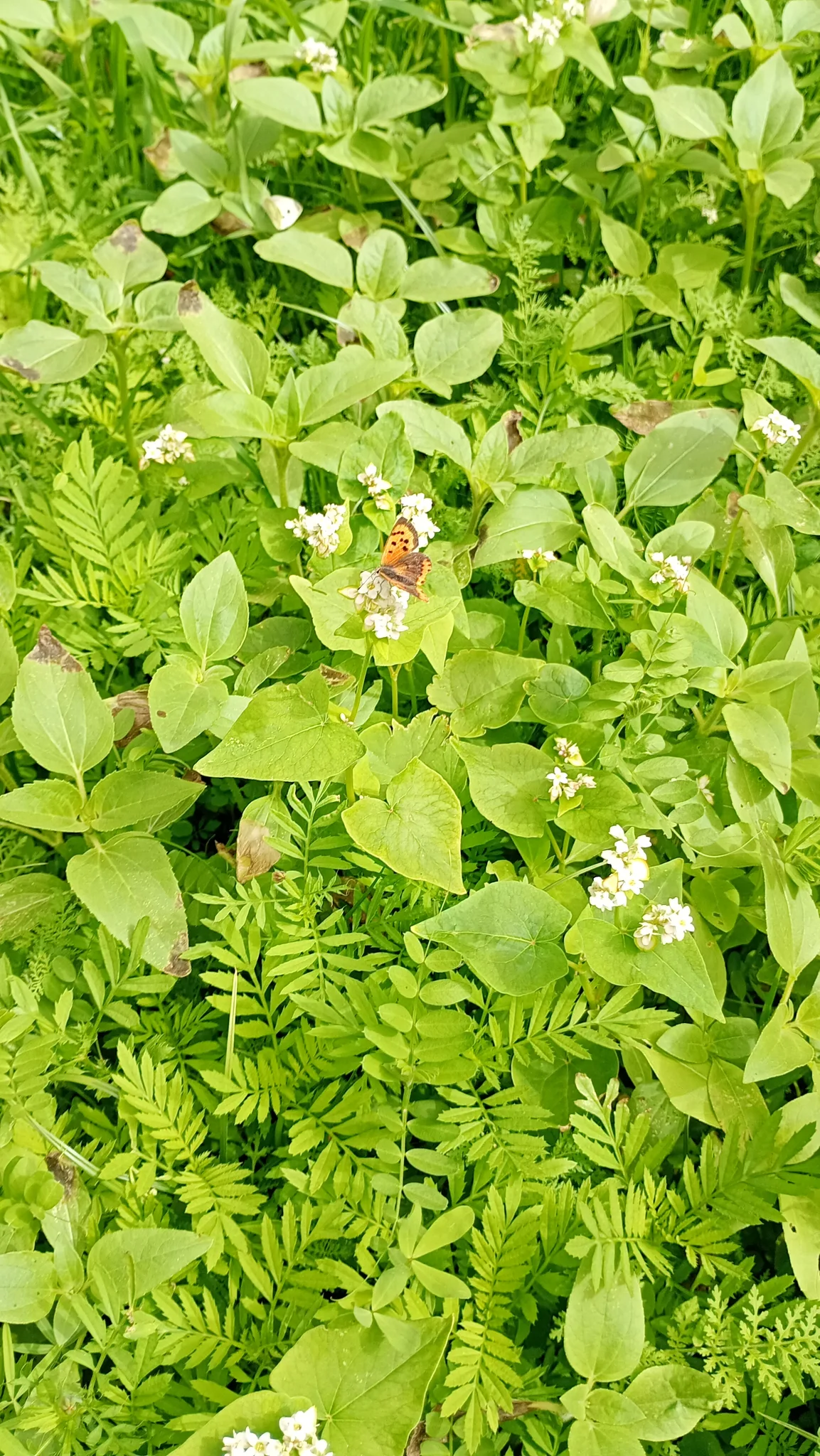

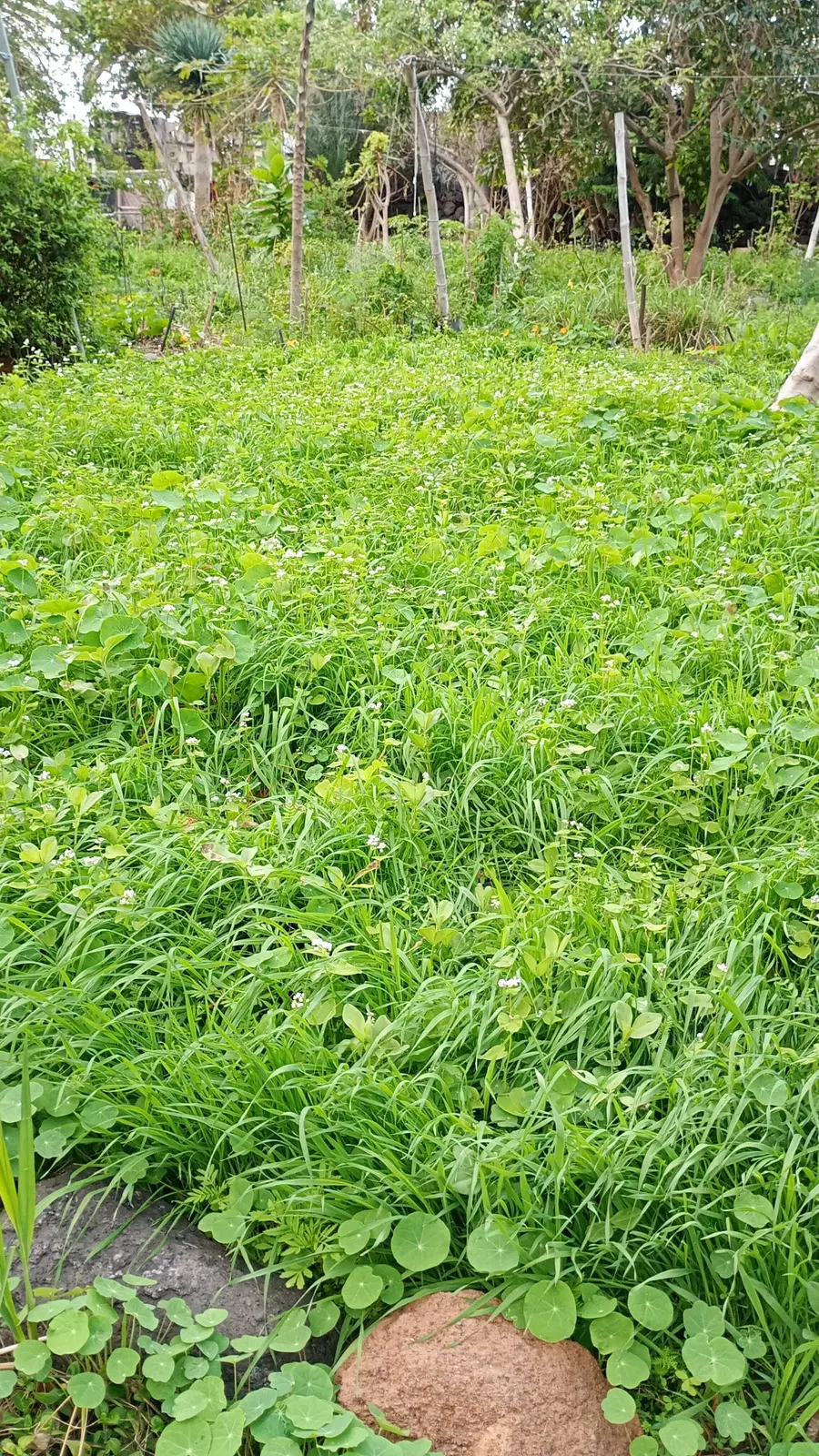
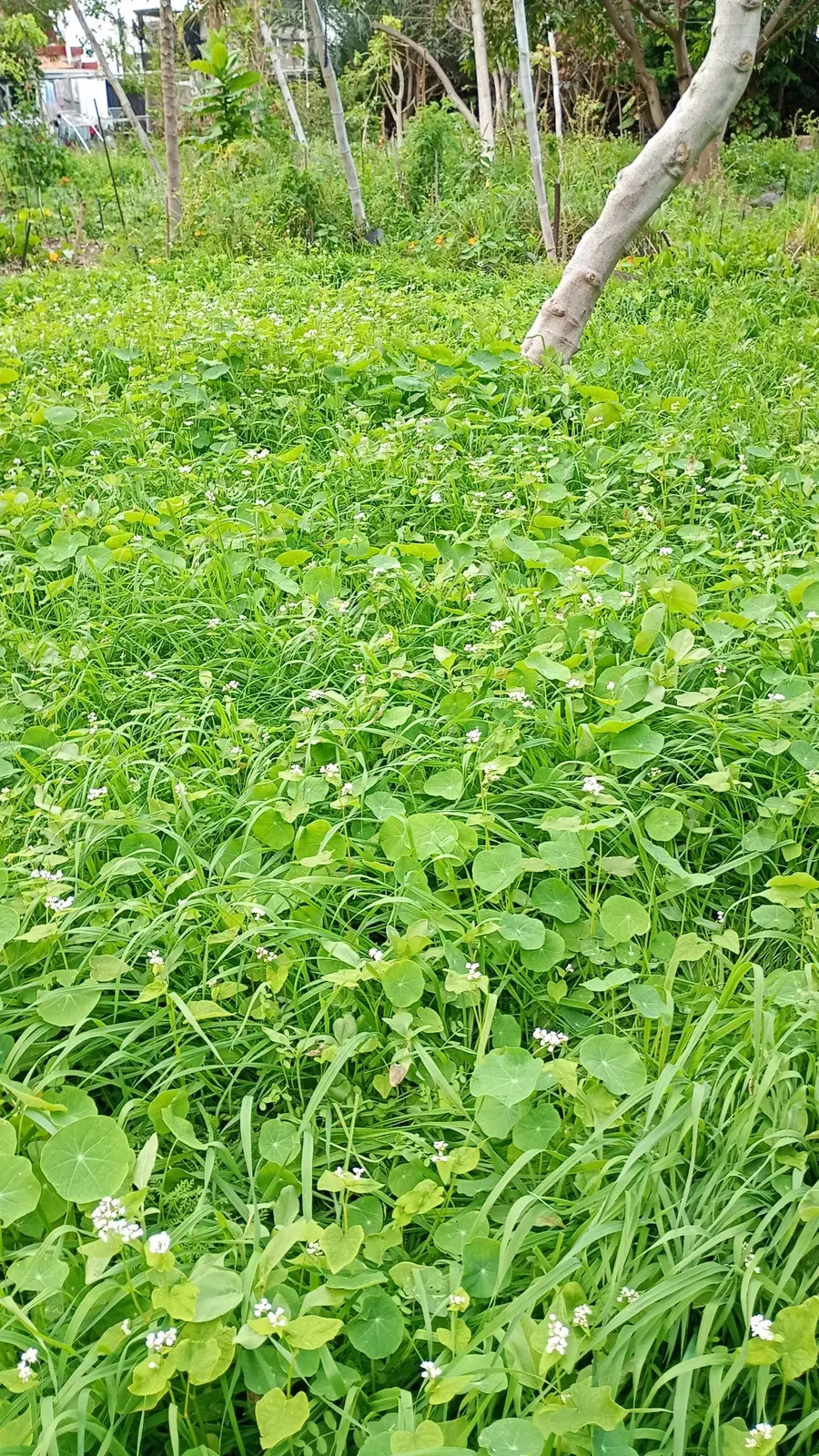
Visual epilogue · May 2026
The epilogue photographs from May 2026 show that, months later, much of the formerly bare surface was barely visible beneath lush greenery.
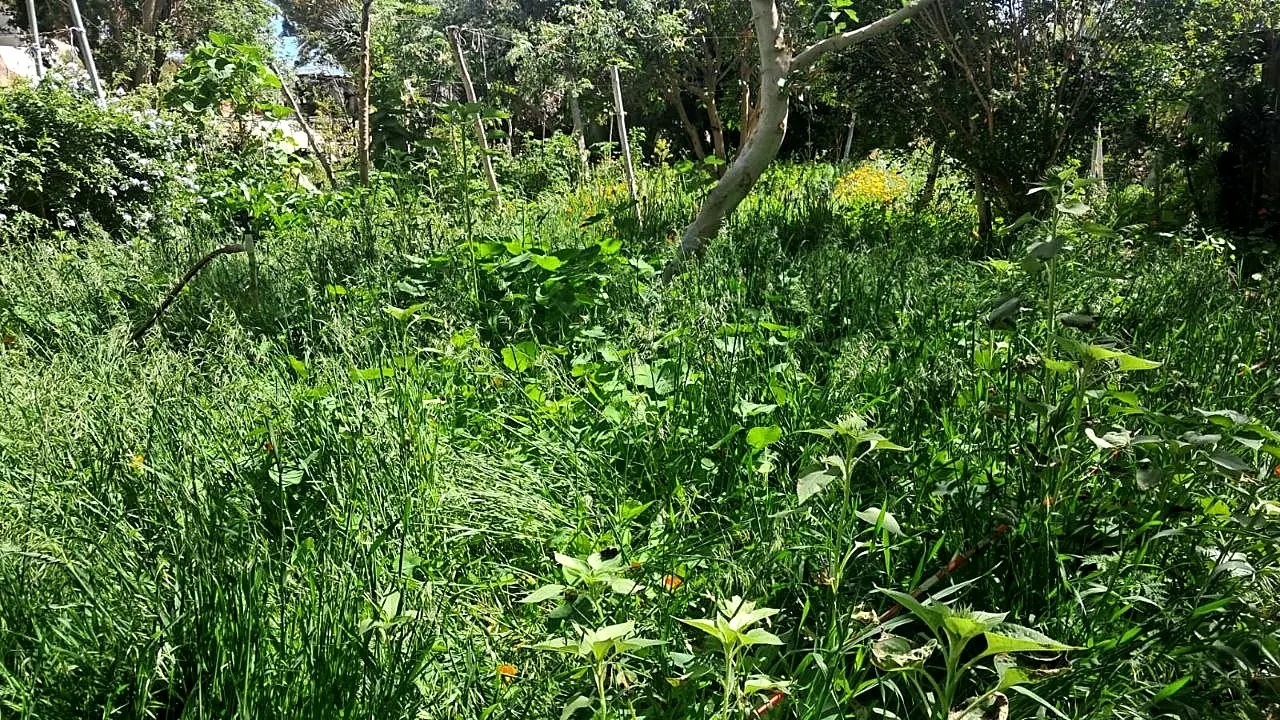
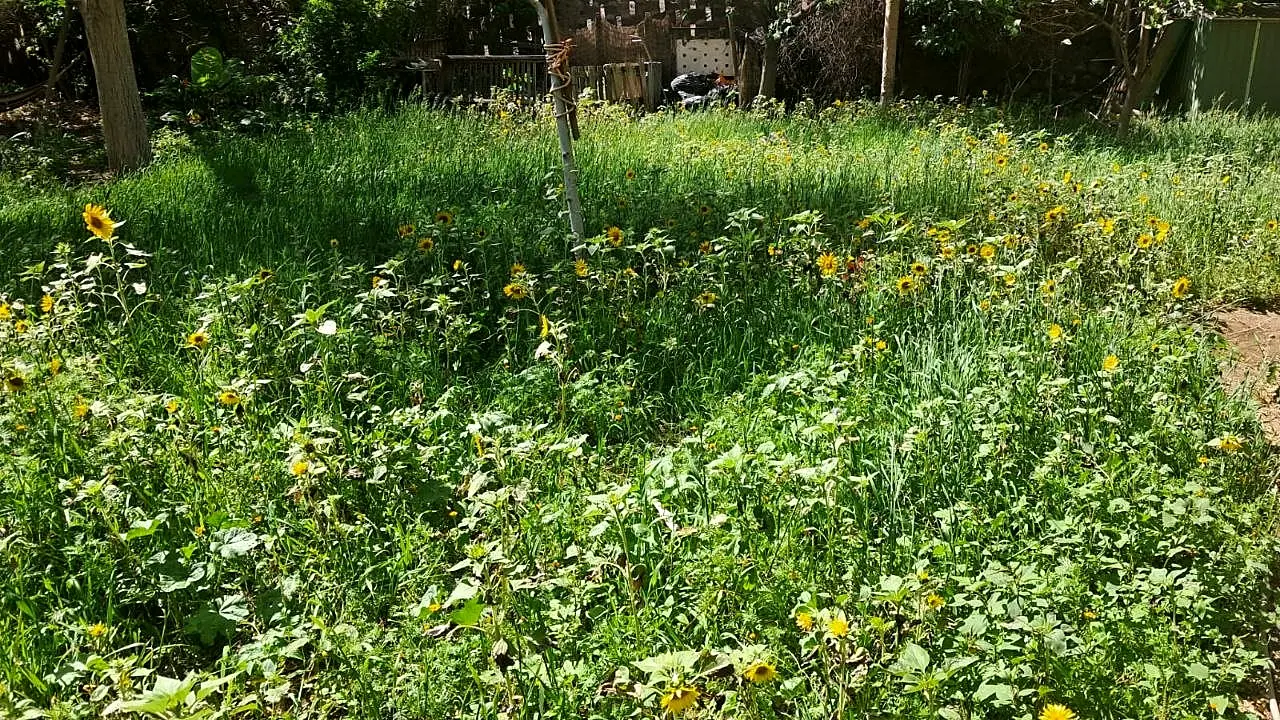
“When I look at this area today, I see more than just green. I see what becomes possible when soil is given time, protection, roots and attention.” – Alexander Maier. This personal reflection is not a measurement result. The greenery is understood not as an endpoint, but as a visible response from the system and an invitation to continue observing.
What can be said – and what remains open
Directly documented
- The seed visibly emerged within the documented period. Between late February and early March, the previously largely bare surface changed into increasingly closed plant cover.
- Density and growth height initially varied from one area to another. Bare or more heavily disturbed patches remained visible and were increasingly occupied by vegetation as development continued.
- By the end of March, different leaf forms, heights and flowers were visible in a spatially mixed stand. A complete botanical identification was not carried out.
- Ladybirds and individual flower visitors were photographed within the vegetation. These individual records do not constitute a standardised biodiversity survey.
- Some woody plants were retained as vertical structure; other woody plants were removed and returned to the biological cycle as biomass.
- The epilogue images from May 2026 show continued lush cover over many areas that had previously been bare.
Plausible mechanisms, but not substantiated in isolation
Compost, one-off opening of the soil, cover, irrigation and diverse roots may together have created more favourable conditions for germination, water absorption, soil organisms and plant growth. Living roots generally release root exudates; microorganisms can use these carbon sources, and nutrient cycles and interactions can develop in the root zone. These mechanisms are professionally plausible, but were not measured directly in the areas.
Restraint now becomes more important than further intervention
After establishment, the task shifted from strong initial intervention to stewardship. Time, continuously living roots, suitable moisture and as little unnecessary disturbance as possible were intended to give the stand room for its own dynamics. “Restraint” does not mean neglecting care: irrigation, problematic dominance, bare patches, cutting requirements and risks must continue to be observed. It means intervening only for a clear reason.
Not provable from the photographic documentation
- what share of the visible development was attributable to any one measure,
- a specific increase in humus or soil organic carbon,
- a lasting improvement in aggregate stability, bulk density or penetration resistance,
- an isolated effect of zeolite, rock powder, compost tea, humic substances or other amendments,
- a measurable improvement in infiltration, soil-moisture dynamics or water storage,
- a change in pH, electrical conductivity, nutrient status or salinity,
- the composition, activity or lasting establishment of a particular microbial community,
- increased species diversity based solely on individual photographs of insects and flowers,
- stability under competition, drought, cutting, use and multiple seasons.
Measure, compare, interpret and adapt
Stewardship is not intended to confirm that an initial assessment was correct. It should reveal what proves viable under the actual conditions, what remains unclear and what should be changed in the next step. A small number of reliable metrics are sufficient if they are collected using the same method, depth and antecedent moisture conditions at fixed times.
- Use the same method, sampling depth, equipment setting and, as far as possible, comparable soil moisture.
- Build time series and – wherever possible – include an untreated comparison area or one with a deliberately varied treatment.
- Consider weather, irrigation, seed and product batch, maintenance and disturbances as possible influencing factors.
- On the basis of the observations, continue or modify a measure, test it anew on a small area or discontinue it.
A manageable set of observations
| Area | Indicator and method | Interval and further detail |
|---|---|---|
| Area and location | Tape measure, area sketch, north orientation, microsite and permanently marked measurement points. | Once as a baseline, then update whenever the plot layout changes. |
| Vegetation | Percentage cover using an estimation frame or grid photograph, mean height, species or functional groups and bare patches. | 7, 14 and 28 days after sowing; then monthly or seasonally. Further detail: biomass and a standardised vegetation survey. |
| Water | Infiltration time using a defined ring method, soil moisture before and after irrigation, and irrigation volume. | Monthly and after heavy rain, always with antecedent moisture as similar as possible. Further detail: volumetric moisture at several depths. |
| Structure | Spade profile, penetration resistance, visible crumbs and rooting depth. | Quarterly at the same points and at comparable moisture. Further detail: bulk density and aggregate stability. |
| Chemistry | pH and electrical conductivity; nutrients according to need. | Baseline, after substantial additions and at least annually. Further detail: organic carbon, nutrients and cation exchange capacity. |
| Biology | Visible soil fauna following a fixed protocol; soil respiration or a suitable, simple laboratory indicator. | Seasonally and compare only within the same method. Further detail: microbial biomass or a laboratory analysis suited to the question. |
| Management | Inputs, quantities, labour time, water, seed and product batches, cutting, disturbances and weather. | Continuously. Without this record, every causal analysis remains incomplete. |
It is better to collect a small number of values regularly and carefully than many measurements only occasionally. For laboratory values, sampling depth, timing and method must remain constant; short-term fluctuations are not automatically long-term trends.
A standardised photographic protocol
- Mark fixed points: Permanently identify the camera position, viewing direction and subject area; use at least one overview point and one close-up point per area.
- Standardise capture conditions: Use, as far as possible, the same time of day, image height, focal length and orientation; do not use digital zoom.
- Include a scale: Photograph a scale, grid or reference frame in soil and seedling images.
- Secure metadata: Record the date, time, area ID, photo point, weather, most recent irrigation and most recent intervention in the filename or log.
- Define evaluation: Estimate percentage cover, bare area and, where relevant, plant count using a recurring grid; archive raw images unaltered.
Twelve-month stewardship plan
- Record the sown stand, mark gaps, check irrigation and, where necessary, protect bare areas or supplement them following a documented decision.
- Observe which species or functional groups prevail, when flowering begins and how cover, height and biomass develop.
- Adapt maintenance and cutting to the actual development; record returned biomass, water use and relevant soil values.
- Use dry periods, regrowth and seasonal stability to assess the resilience of the stand.
- Evaluate together what has proved effective, what remains open and how the next area can be established with a better comparison design.
A small comparison structure would be particularly informative: an untreated reference, an area receiving the base treatment and further variants in which only one component is changed at a time. The schedule must be adapted to the sowing date, rainy season, ability to irrigate and use of the area.
Early signs, open long-term questions and a personal compass
Between the first areas of bare soil and the later green cover lay many small decisions, physical effort and daily observation. In retrospect, four levels must be distinguished:
Rapid germination, increasing ground cover, multiple growth forms and flowers were encouraging early signs.
Humus accumulation, stable structure, water-holding capacity and lasting plant communities can be measured only over the longer term.
Good compost, adapted soil cultivation, living roots, permanent cover and careful documentation.
Test additional preparations on small areas and through comparison; observation determines whether to continue, modify or discontinue them.
Regeneration is therefore not a single work step, but a long-term relationship between soil, plants, water and the people who work with them. The personal bee–grasshopper image remains a decision-making question: does my work leave more behind that is built up than broken down? It is an ethical compass, not a scientific metric.
At the same time, the practical work made visible that site, water, soil, vegetation, materials, maintenance and observation act in parallel. A compelling interim image does not answer every question about cause and durability. From this tension – enabling development in practice while clearly limiting the scope of the claims – an impulse later arose for RED’s adaptive, documentation-oriented approach. The historical work itself remains distinct in both time and terminology.
A hydraulic “flow biotope”
As a long-term addition, RED recommended a water landscape developed further from the site observations. Its gently curving banks are intended to settle quietly into the relief rather than visually dominate the landscape. The design envisages a larger main pond and a smaller flow biotope, hydraulically coupled by a concealed pipe. The elongated arrangement and downstream watercourses are intended to lengthen the flow path.
In the long term, succession is intended to progress further. Today’s initially herb- and grass-rich vegetation structure should gradually be allowed to develop into a multilayered forest structure capable of providing food over the long term. The aquatic system is intended to add water, moisture and habitat structures and thereby support the transition to a diverse, site-adapted forest ecosystem.

In the concept, a concealed pipe connects both basins at a shared water level. The narrow, slightly elevated inflow crosses the lower ring channel and enters the main pond on the opposite bank. Only the outflow from the smaller biotope feeds the ring channel and curved meanders. A gently sloping stone zone is planned there as a restrained aeration area. As a planning objective, the shared water level is approximately 30 centimetres above the surrounding relief.
Selected sources
- Raabe, R. D. · The Rapid Composting Method · University of California
- Cornell Waste Management Institute · Compost Chemistry
- U.S. EPA · Composting
- USDA NRCS · Soil Quality Indicators
- USDA NRCS · Soil Health Assessment
- Schmidt et al. (2011) · Persistence of soil organic matter · Nature 478, 49–56 · doi:10.1038/nature10386
- Zeng (2008) · Carbon sequestration via wood burial · Carbon Balance and Management 3, 1 · doi:10.1186/1750-0680-3-1
- Van der Wal, Ottosson & De Boer (2015) · Neglected role of fungal community composition in explaining variation in wood decay rates · Ecology 96(1), 124–133 · doi:10.1890/14-0242.1
- SARE · Cover Crops
- FAO · Use of phosphate rocks for sustainable agriculture
- Review · Natural zeolites in agriculture
- Basalt amendments · field evidence and controls
- Basalt rock dust · weathering and agronomic assessment
- Basalt rock dust · field and laboratory study
- Aksakal (2012) · Effects of diatomite on soil physical properties · Soil & Tillage Research 122, 77–83
- Diatomite / diatomaceous earth · application to soil physics
- Phosphate rock · reaction and soil chemistry
- Humic substances · proton binding and buffering
- Humic substances · root activity and plant response
- Rose et al. (2014) · Humic substances and plant growth · Advances in Agronomy 124, 37–89
- Seaweed extracts as plant biostimulants · meta-analysis
- Tagetes and plant-parasitic nematodes · review
- Scheuerell & Mahaffee (2002) · Compost tea review · Compost Science & Utilization 10(4), 313–338
- Kim et al. (2015) · Microbial and chemical properties of compost teas
- Bali et al. (2021) · Compost tea and plant/soil responses
- USDA ARS · Molasses and pathogen regrowth in compost tea
Image sources: Project photography by Alexander Maier and the Finca Argayall documentation. Dates follow the capture information and image captions; the epilogue photographs date from May 2026.
Glossary
The terms are formulated as working definitions for this report. They do not replace standards-compliant descriptions of measurements or planning, but help to distinguish observation, mechanism, planning and evidence clearly in language.
- Adaptive management
- A repeated cycle of measuring, comparing, interpreting in context and adapting a measure.
- Aerobic
- A process with sufficient oxygen availability; in compost, it is supported by pore space, suitable moisture and turning.
- Aggregate / soil aggregate
- A spatial association of mineral and organic soil constituents. Visible crumbs do not yet constitute measured evidence of high stability.
- Aggregate stability
- The resistance of soil aggregates to disintegration, for example when wetted or mechanically stressed; comparable only when a defined method is used.
- Algae product
- A mixture of substances obtained from or based on algae that can be used as a supplementary plant-related input. Composition and effect depend strongly on the raw material, processing, dose, crop and site.
- Anaerobic
- A process under severely limited oxygen. Not every anaerobic reaction is identical; putrid odours are a warning sign.
- Application route / foliar application
- The way a material is applied, for example to the soil, into the root zone or onto plant surfaces. Foliar application directly reaches above-ground plant parts.
- Working hypothesis
- A provisional, testable explanation or expectation – expressly not yet a confirmed result.
- Species group and functional group
- A species group is based on botanical classification; a functional group combines plants by a role such as cover or fine-root formation. The two are not equivalent.
- Emergence
- The visible appearance of seedlings after sowing; it depends on germination capacity, sowing depth, moisture, temperature and feeding damage, among other factors.
- Baseline / baseline measurement
- A standardised survey before a measure is undertaken, enabling later comparisons across time or space.
- Observation
- A documented condition or visible change without an automatic statement about its cause.
- Bee–grasshopper question
- Alexander Maier’s personal heuristic: does one’s work build up more than it breaks down? It is not a scientific metric.
- Biofilm
- A community of microorganisms adhering to a surface within a self-produced matrix; in hoses and vessels, it can make hygiene and process control more difficult.
- Biomass
- The mass of living or recently dead organisms per reference area. Fresh or dry mass and the measurement method must be specified.
- Biostimulant
- A product or mixture of substances intended to influence plant or rhizosphere processes without being defined primarily as a fertiliser or plant-protection product.
- Biological nitrogen fixation
- The conversion of atmospheric N₂ into biologically bound forms of nitrogen by certain microorganisms; in legumes, often in symbiosis with rhizobia.
- Soil respiration
- The release of CO₂ from root and microorganism activity. It depends strongly on temperature, moisture, substrate and the measurement method.
- Ground cover
- The proportion of the surface covered by living plants, mulch or another protective layer.
- Soil fauna
- All animals living in or on the soil, from microscopic forms to visible decomposers.
- Soil health
- The capacity of a soil, as a living system, to perform functions for plants, water, nutrients and the environment.
- Seed-to-soil contact
- Sufficient contact between seed and soil, which can facilitate water uptake and germination without heavily compacting the soil.
- C:N ratio
- The mass ratio of carbon to nitrogen in a material or mixture; it influences decomposition but does not determine it on its own.
- Carbonate content
- The proportion of carbonate-bearing minerals in the soil; it influences pH buffering and the response to acidic inputs, among other things.
- Percentage cover
- The estimated or measured proportion of the soil area covered by vegetation in vertical projection.
- Diatomite / diatomaceous earth
- A porous siliceous material derived from fossil diatoms. Its properties depend on origin, purity, processing and particle size.
- Documented
- A work step substantiated by a project record, an unequivocally assigned photograph or confirmed information. Documentation does not automatically substantiate its effect.
- Electrical conductivity (EC)
- An indicator of dissolved salts; relevant to mineral amendments, irrigation water and sensitive plants.
- Penetration resistance
- The resistance of the soil to a standardised probe; strongly dependent on soil moisture, equipment and measurement speed.
- Photo point
- A permanently defined camera position with a specified viewing direction, image height and subject area.
- Fulvic acid
- A historically and operationally defined humic-substance fraction that is, on average, smaller and soluble across a broader pH range; its composition is not uniform.
- Dissolved oxygen
- The amount of oxygen dissolved in water; central to the assessment of actively aerated liquid preparations.
- Genotype
- The genetic make-up of a plant; it can influence growth, roots, stress response and suitability within the same species.
- Hot phase / time–temperature management
- The stage of composting with substantially elevated temperature. For hygiene claims, temperature, duration and monitoring throughout the entire pile must be considered together.
- Humic substances
- Heterogeneous groups of organic substances arising from transformation processes; their properties vary greatly according to origin, extraction and product.
- Humus
- A term used inconsistently for transformed soil organic matter; here it is not understood as a permanently unchanging class of substance.
- Hydraulically connected
- Coupled through the movement of water so that water levels and flows can influence one another.
- Infiltration
- The entry of water into the soil, dependent on pores, structure, cover and antecedent moisture, among other factors.
- Inoculation
- The introduction of biological material or defined microorganisms with the aim of influencing biological processes. Successful establishment depends, among other things, on living roots, a continuous carbon supply, suitable habitat and appropriate moisture and oxygen conditions.
- Cation exchange
- The capacity of soil constituents to bind positively charged ions temporarily and exchange them.
- Causality
- Evidence that a measure caused a change; temporal sequence and visual similarity alone are not sufficient.
- Germination capacity
- The proportion of viable seeds that germinate normally under defined conditions; important when calculating seeding rates.
- Germination or plant test
- A simple comparison used to test possible growth inhibition or the suitability of a compost for an intended use.
- Compost extract and compost tea
- Liquid preparations made from compost. “Compost tea” often refers to actively aerated and sometimes fed preparations; production method, hygiene and effects are not interchangeable.
- Compost maturity
- The condition in which active decomposition has subsided substantially and the material is sufficiently stable for the intended use.
- Complexation
- The chemical binding of a metal ion or another particle by suitable molecules or functional groups. It can alter mobility and availability without guaranteeing a particular plant uptake.
- Bulk density
- Dry soil mass per total volume, including pores; a physical indicator that is comparable only with standardised sampling.
- Legume
- A plant in the Fabaceae family; many species can fix nitrogen symbiotically with compatible rhizobia.
- Lignin
- A complex, structure-forming constituent of woody plant tissue that is generally broken down more slowly than many readily available carbohydrates.
- Management record
- Continuous documentation of inputs, quantities, work, water, batches, maintenance, weather and disturbances.
- Molasses
- A sugar-rich by-product used in some compost-tea recipes as a readily available carbon source; it can also increase oxygen demand and hygiene risks.
- Microsite
- A small-scale area with its own conditions, such as light, wind, moisture, root competition, soil structure or irrigation.
- Mineralogy
- The type, composition and structure of the minerals in a material or soil; decisive for how a rock powder or zeolite may react.
- Mineralisation
- Microbial conversion of organic compounds into inorganic, potentially plant-available forms; carbon may also be released as CO₂ in the process.
- Mulch
- A layer of organic or mineral material that protects the soil surface; its effects and risks depend on the material and layer thickness.
- Nodulation
- The formation of root nodules as part of a compatible legume–rhizobia symbiosis.
- Nutrient limitation
- Limitation of a biological process through insufficient availability of a required nutrient.
- Nutrient cycling
- The biological and chemical transformation, binding, release and movement of nutrients. Increased cycling does not automatically mean higher plant availability or lower losses.
- Organic matter
- All organic constituents in the soil – from fresh residues to compounds transformed by microorganisms.
- Pathogen
- A disease-causing organism. Its possible presence cannot be ruled out solely by the odour or appearance of a compost.
- Perlhumus
- The term used in the project for the humic-substance granules applied. The name alone does not describe a uniform chemical composition; the specific product data sheet is decisive.
- pH
- A logarithmic measure of hydrogen-ion activity. Product pH, soil pH and long-term buffering effects must be distinguished from one another.
- Biochar
- A carbon-rich material produced through thermal treatment of plant biomass; its properties depend strongly on the feedstock and production conditions.
- Plausible / not substantiated
- “Plausible” identifies a professionally comprehensible possible mechanism. “Not substantiated” means that measurement, comparison or unequivocal attribution is lacking for the specific site.
- Pore space
- All air- or water-filled voids in soil or compost that influence transport, storage and habitat.
- Buffering capacity
- The capacity of a system to attenuate changes, such as in pH, when acids or bases are added.
- Rhizobia
- A group of nitrogen-fixing bacteria capable of forming a root-nodule symbiosis with compatible legumes; host and strain must be compatible.
- Rhizosphere
- The area of soil directly influenced by roots, exudates and the organisms living there.
- Ring channel
- In the pond concept, a circulating watercourse that spatially encloses both bodies of water and is intended to be fed by the outflow from the smaller biotope.
- Raw image
- An unaltered original photograph, including the original image information; the basis for traceable subsequent editing and evaluation.
- Salt load
- The total amount of dissolved salts reaching an area through an application; concentration and the quantity applied must be considered together.
- Acid capacity
- The total quantity of active acid that a material can release or that can be neutralised under defined conditions. It is more informative for a soil reaction than product pH alone.
- Meander
- A curved channel section intended to lengthen the flow path in the concept.
- Sorption
- The binding of substances to or within a material; it encompasses different physical and chemical mechanisms and is not automatically permanent.
- Confounding factor
- A variable that, in addition to the measure under investigation, can alter the observed result and distort causal interpretation.
- Flow biotope
- Project term for a designed, planted aquatic biotope with deliberately guided flow; it is not automatically a standardised technical or permitting term.
- Substrate
- Material that serves organisms as habitat or a food source; in compost, for example, the mixture of organic source materials.
- Succession
- Change in the composition and structure of an ecological community over time; not necessarily a linear path to a predetermined final state.
- Thousand-seed weight
- The mass of one thousand seeds; used together with germination capacity and the target seeding density to calibrate a seed mixture.
- Clay–humus interactions
- Binding and protection mechanisms involving organic compounds, mineral surfaces, aggregates and microorganisms; not a single, permanent “complex”.
- Comparison area
- An area treated as similarly as possible in which precisely the measure under investigation is omitted or deliberately varied.
- Surface sealing
- Disintegration and redistribution of surface aggregates by water, followed by the formation of a dense crust.
- Antecedent moisture
- The soil’s water content before a measurement or irrigation; important for comparable infiltration and resistance measurements.
- Water retention
- Retention of water in pores and on surfaces. Quantity and plant availability depend on pore size, matric potential, material, soil and initial moisture.
- Root exudates
- Organic compounds released by living roots into the surrounding soil that can, among other functions, serve microorganisms as substrate.
- Zeolite
- A group of porous aluminosilicate minerals with a high cation exchange capacity; properties vary with mineralogy.
- Cover crop / green manure
- A plant stand grown primarily to provide soil functions, nutrient management and biomass rather than a harvested product.